  What's New! Detailed Sitemap All images © by Roberto Piperno, owner of the domain. Write to romapip@quipo.it. Text edited by Rosamie Moore. Page revised in December 2006. |
 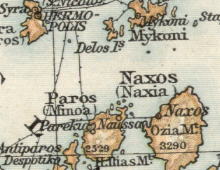 Paris (Paros) Paris (Paros)
Key dates: 1207 Marco Sanudo a Venetian adventurer conquered Nasso and the nearby islands including Paris 1566 The last Duke of Nasso, Jacopo IV Crispo was cashiered by the Sultan 1645-69 During the War of Candia the Venetians often controlled the Cycladic islands including Paris Paris, as the Venetians called Paros, is the second largest island of the Cyclades. In ancient times it was famous for its white marble which was used for many important statues and also for temples (Tempio di Castore e Polluce in Rome). Two large bays on the western (Paroikia) and northern (Naoussa) coasts were important natural harbours. Paroikia
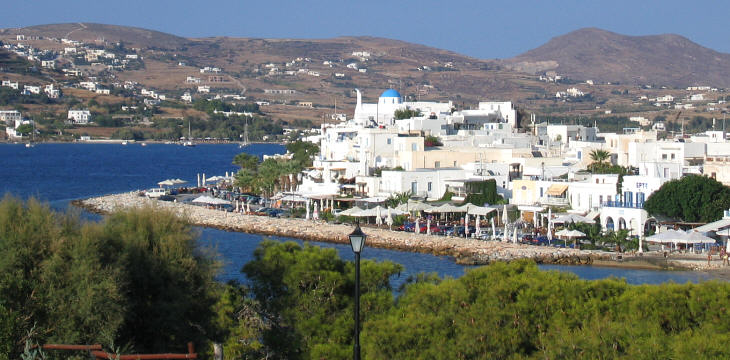
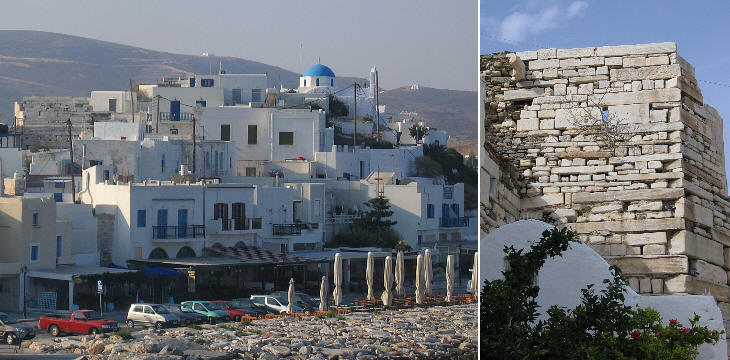
The Venetian town was built on a mound at the centre of the bay; the expansion of Paroikia and the modern road at the edge of the sea make it difficult to realize the fortified appearance it had in the past.
The main fortification of Paroikia was a huge tower built with stones of the ancient temples: its purpose was to block an attack coming from land.
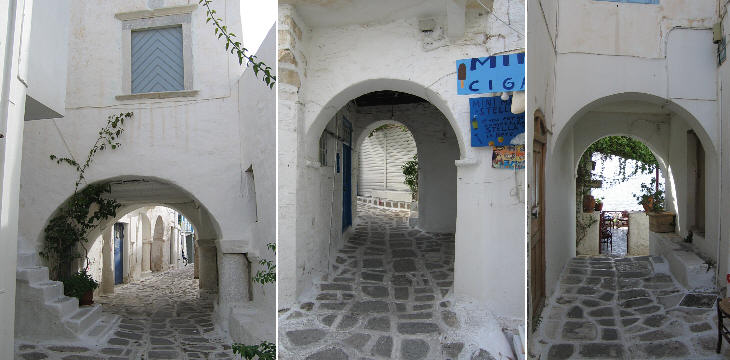
The houses were arranged in order to form a barrier with only a few openings giving access to the town.
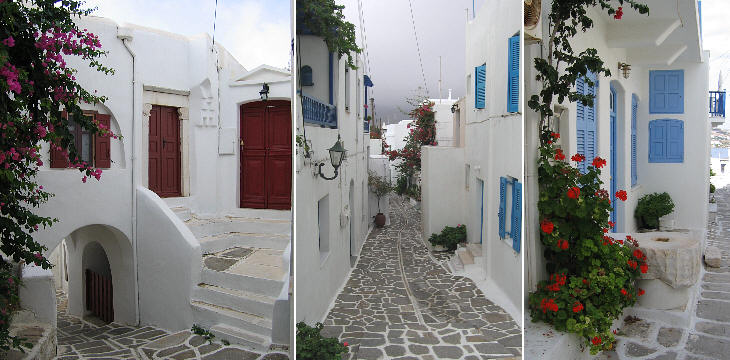
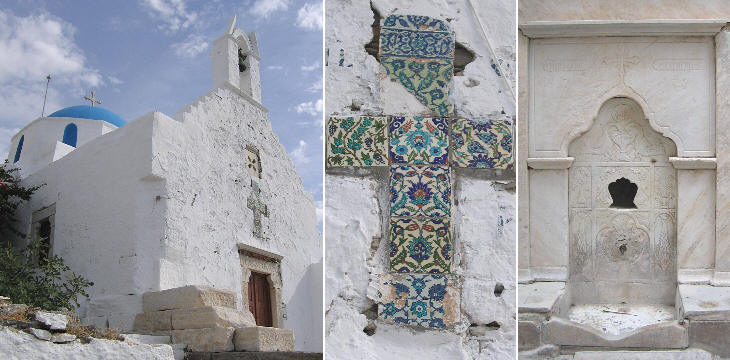
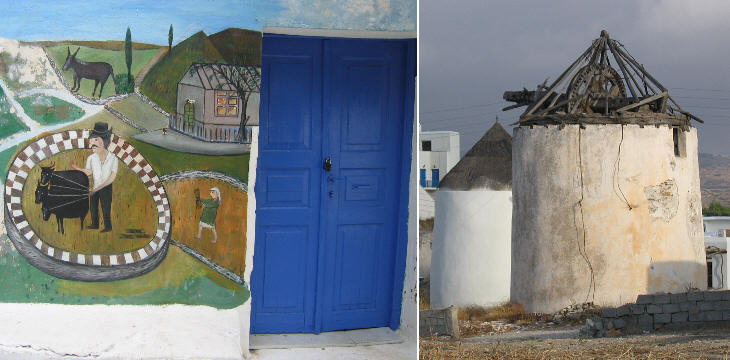
Paroikia and the other villages of the island have perhaps the finest buildings of the so-called Cycladic architecture which in recent times spread to almost all Greek islands, even where there was a very different kind of traditional architecture.
The Ottoman rule on many Cycladic islands did not actually impact on the everyday life of the inhabitants who were allowed to maintain their religious beliefs; the only remaining evidence of this domination can be found in the adoption of an Ottoman pattern in the decoration of a fountain and in the presence of a cross made up of typical Ottoman ceramics, most likely from Iznik (Nicea).
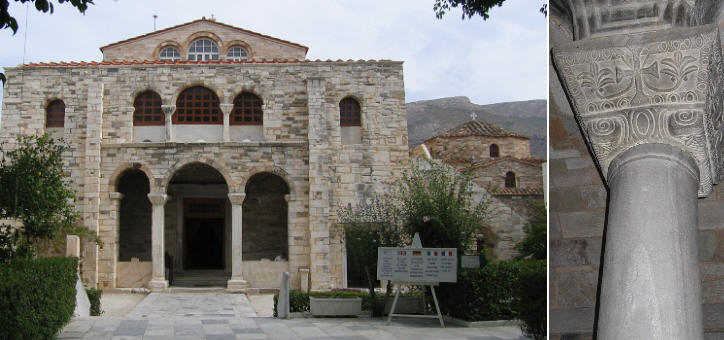
The Venetians did not pull down ancient temples to erect their marble tower, because these buildings had already been pulled down during the VIth century when Emperor Justinian decided to eradicate the allegiance to the pagan gods. In some locations (often because of shrines e.g. Ephesus, Aphrodisia) the old temples were still regarded as a valuable memory of happier times. The many temples which still existed in Paroikia became the quarries providing the construction material for a large complex of churches, chapels and other religious buildings. This explains why it is called "Church of the 100 doors".
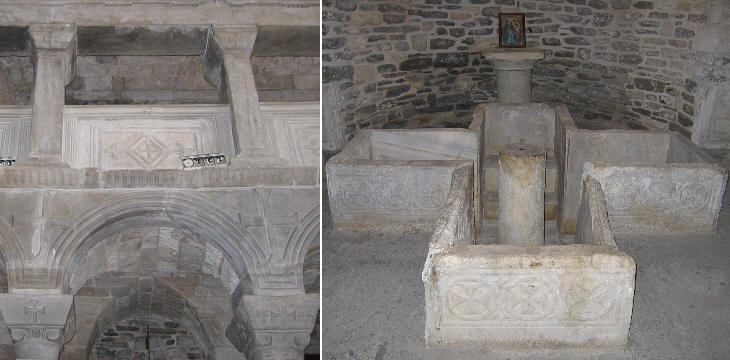
Panagia Ekatondapiliani retains some very interesting features of the early Christian buildings including a matroneum (women's gallery) and a very rare basin for full immersion baptism. Naoussa
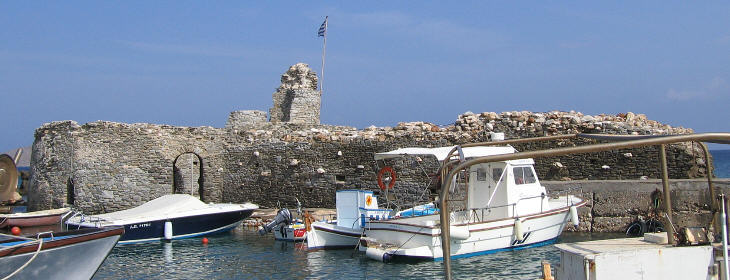
Today Naoussa is a booming tourist resort disfigured by a reckless real estate development: the many beaches of its large bay attract so many foreigners that unlike Paroikia very little is left of the old small town. The Dukes of Nasso built a tower to protect the harbour; this fortification was later on expanded by the Ottomans who added to it a battery of cannon.
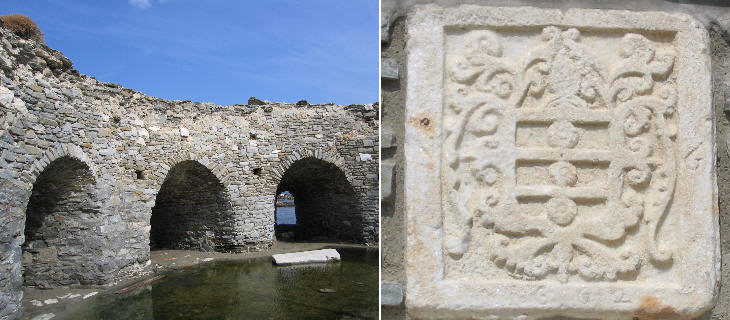
The Ottoman addition was built in the second half of the XVIIth century after the War of Candia during which the Venetians gained control of most of the Cyclades: the bay of Naoussa was perfectly located at the centre of the Archipelago, as this group of islands was called, so the Venetian fleet often used it as a base. A 1662 coat of arms of a Venetian commander is now walled on a modern bridge near the harbour. Wandering about
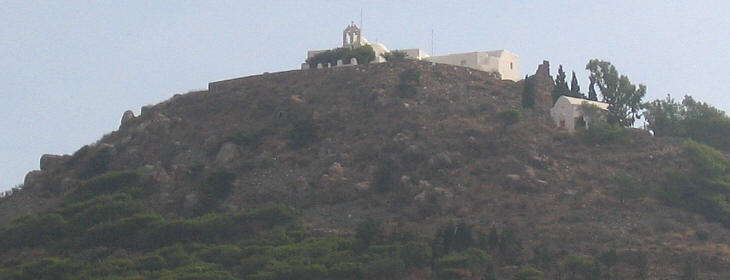
A third Venetian fortified site was located on a hill on the eastern coast of the island: its remaining few walls were included in a monastery built at a later date. Paros was important not only for its central location and its natural harbours, but also because its fertile soil allowed the farming of a wide variety of crops.
Introductory page on the Venetian Fortresses Pages of this section: On the Ionian Islands: Corfù (Kerkyra) Paxo (Paxi) Santa Maura (Lefkadas) Cefalonia (Kephallonia) Asso (Assos) Itaca (Ithaki) Zante (Zachintos) Cerigo (Kythera) On the mainland: Butrinto (Butrint) Parga Preveza and Azio (Aktion) Vonizza (Vonitsa) Lepanto (Nafpaktos) Atene (Athens) On Morea: Castel di Morea (Rio), Castel di Rumelia (Antirio) and Patrasso (Patra) Castel Tornese (Hlemoutsi) and Glarenza Navarino (Pilo) and Calamata Modon (Methoni) Corone (Koroni) Braccio di Maina, Zarnata, Passavà and Chielefà Mistrà Corinto (Korinthos) Argo (Argos) Napoli di Romania (Nafplio) Malvasia (Monemvassia) On the Aegean Sea: Negroponte (Chalki) Castelrosso (Karistos) Oreo Lemno (Limnos) Schiatto (Skiathos) Scopello (Skopelos) Alonisso Schiro (Skyros) Andro (Andros) Tino (Tinos) Micono (Mykonos) Siro (Syros) Egina (Aegina) Spezzia (Spetse) Paris (Paros) Antiparis (Andiparos) Nasso (Naxos) Serifo (Serifos) Sifno (Syphnos) Milo (Milos) Argentiera (Kimolos) Santorino (Thira) Folegandro (Folegandros) Stampalia (Astipalea) Candia (Kriti) You may refresh your knowledge of the history of Venice in the Levant by reading an abstract from the History of Venice by Thomas Salmon, published in 1754. The Italian text is accompanied by an English summary. Clickable Map of the Ionian and Aegean Seas with links to the Venetian fortresses and to other locations (opens in a separate window) |