  What's New! Detailed Sitemap All images © by Roberto Piperno, owner of the domain. Write to romapip@quipo.it. Text edited by Rosamie Moore. Page added in December 2006. |
  Argentiera (Kimolos) Argentiera (Kimolos)
Key dates: 1207 Marco Sanudo a Venetian adventurer conquers Milo and nearby Argentiera which becomes part of the Duchy of Nasso 1566 The last Duke, Jacopo IV Crispo is cashiered by the Sultan
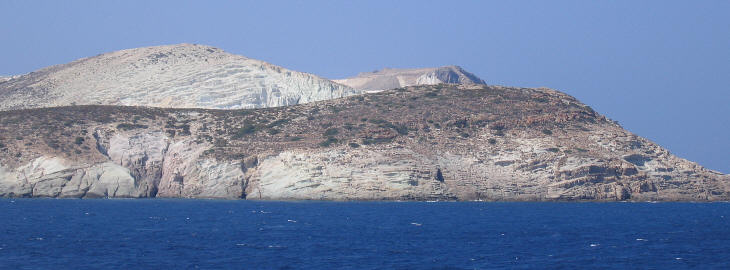
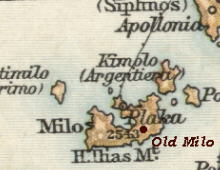
Argento is the Italian word for silver and the Venetians called this small island Argentiera owing to its silver mines or (according to another explanation) owing to the silvery aspect of its chalk cliffs. Kimolos, the Greek name of the island, is a reference to chalk (in Greek kimolia), which is still mined and supports the local economy.
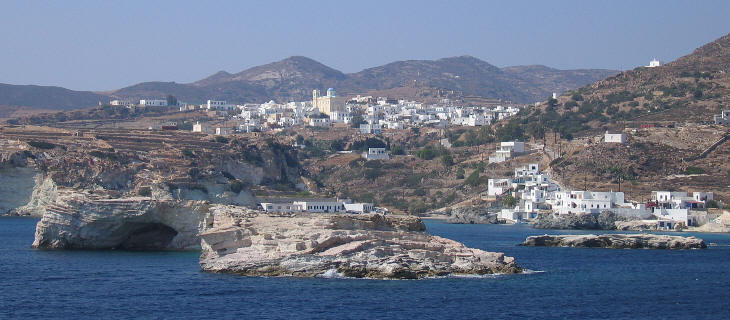
Chora, the main village, is located on a hill above a small natural harbour which has not been modified to cater for yachts and large ships: there are no fishing boats, an indication that the inhabitants live off farming and mining.
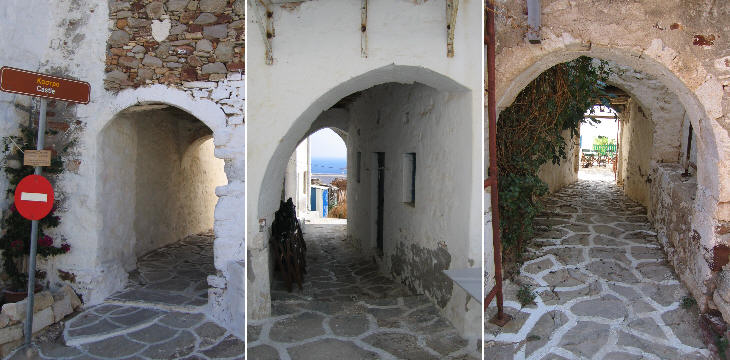
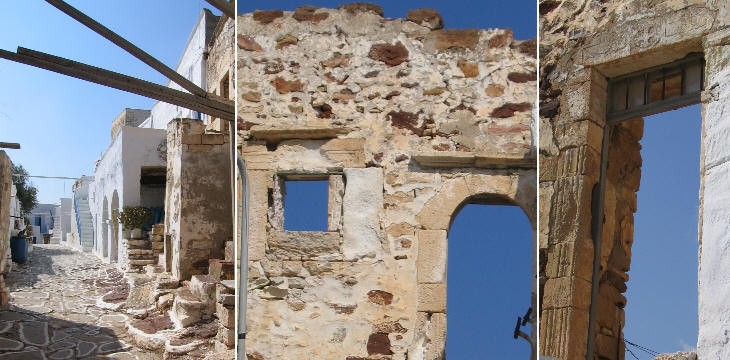
The settlement during the Venetian period was made up of rows of houses forming a rectangle: the buildings did not have doors or windows on their outer side: the village could only be accessed through three small gates.
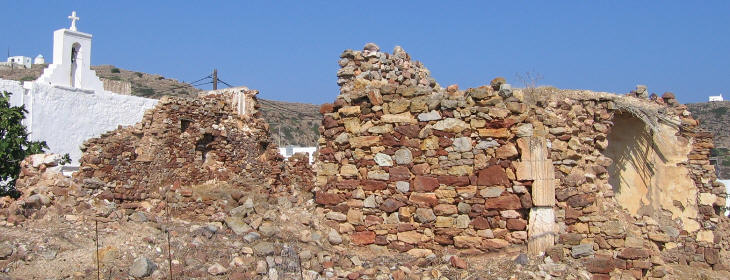
The lords of Kimolos (the Gozzadini family or their representatives on the island) lived in a keep inside the large rectangular square formed by the houses: its ruins show that it was a massive construction.
The houses were built according to a standard pattern with outside steps leading to the upper apartment: those which are still used have been modified with the opening of additional windows: the abandoned ones as well as the keep show evidence of architectural elements having some pretentiousness.
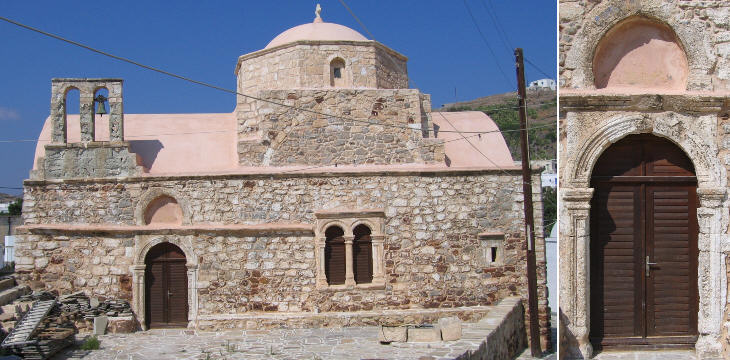
The 1608 chapel dedicated to Agios Hrissostomos and Evanghelistria shows that the Ottomans did not impose on the inhabitants of the small Aegean islands the same restrictions they applied to the Christian communities living on the mainland concerning the size and relevance of their churches. The chapel, which luckily has not been covered with the usual white plaster, has some interesting details. The image used as background for this page shows a coat of arms (maybe of a Franciscan monastery) above the entrance of one of the gates. Introductory page on the Venetian Fortresses Pages of this section: On the Ionian Islands: Corfù (Kerkyra) Paxo (Paxi) Santa Maura (Lefkadas) Cefalonia (Kephallonia) Asso (Assos) Itaca (Ithaki) Zante (Zachintos) Cerigo (Kythera) On the mainland: Butrinto (Butrint) Parga Preveza and Azio (Aktion) Vonizza (Vonitsa) Lepanto (Nafpaktos) Atene (Athens) On Morea: Castel di Morea (Rio), Castel di Rumelia (Antirio) and Patrasso (Patra) Castel Tornese (Hlemoutsi) and Glarenza Navarino (Pilo) and Calamata Modon (Methoni) Corone (Koroni) Braccio di Maina, Zarnata, Passavà and Chielefà Mistrà Corinto (Korinthos) Argo (Argos) Napoli di Romania (Nafplio) Malvasia (Monemvassia) On the Aegean Sea: Negroponte (Chalki) Castelrosso (Karistos) Oreo Lemno (Limnos) Schiatto (Skiathos) Scopello (Skopelos) Alonisso Schiro (Skyros) Andro (Andros) Tino (Tinos) Micono (Mykonos) Siro (Syros) Egina (Aegina) Spezzia (Spetse) Paris (Paros) Antiparis (Andiparos) Nasso (Naxos) Serifo (Serifos) Sifno (Syphnos) Milo (Milos) Argentiera (Kimolos) Santorino (Thira) Folegandro (Folegandros) Stampalia (Astipalea) Candia (Kriti) You may refresh your knowledge of the history of Venice in the Levant by reading an abstract from the History of Venice by Thomas Salmon, published in 1754. The Italian text is accompanied by an English summary. Clickable Map of the Ionian and Aegean Seas with links to the Venetian fortresses and to other locations (opens in a separate window) |