  What's New! Detailed Sitemap All images © by Roberto Piperno, owner of the domain. Write to romapip@quipo.it. Text edited by Rosamie Moore. Page added in October 2005. |
  Oreo Oreo
Key dates: 1204 Venice acquires the island of Euboea (at the time called Negroponte after the name of its main town) as a consequence of the fall of the Byzantine Empire 1470 The Turks seize Negroponte and this gain is confirmed by the peace treaty signed at the end of the first Venetian-Turkish war (1463-79) The island of Negroponte is a long mountainous ridge which runs parallel to the peninsula of Attica, the region of Athens. Moving around in the island is rather difficult even today, so that it is in general easier to take a ferry to the mainland, travel on the highway to Athens and then take another ferry to reach a different point of the island. For this reason the Venetians divided it into three regions (or baronies): Negroponte located in a central position, Castelrosso at its southern tip and Oreo at its northern tip.
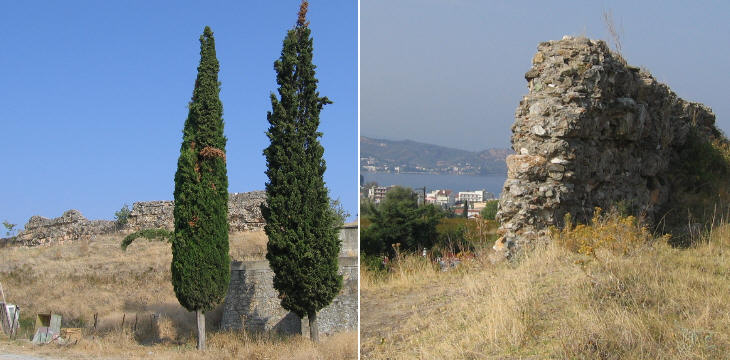
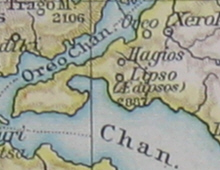
The northern part of Negroponte is separated from the Greek mainland by a long and winding channel: at its eastern entrance (towards the Aegean Sea) a low and flat hill provided an excellent site for controlling the access to the channel. The hill has been inhabited since the time of Ancient Greece: the Venetians built on the site of the ancient acropolis a fortress to ensure no enemy would try to enter the channel. Very little is left of their fortress as the Turks, having conquered the whole region, had no reason to maintain it.
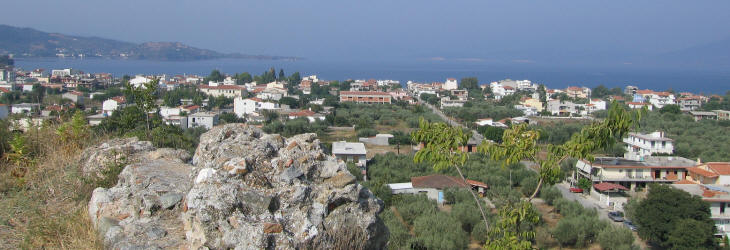
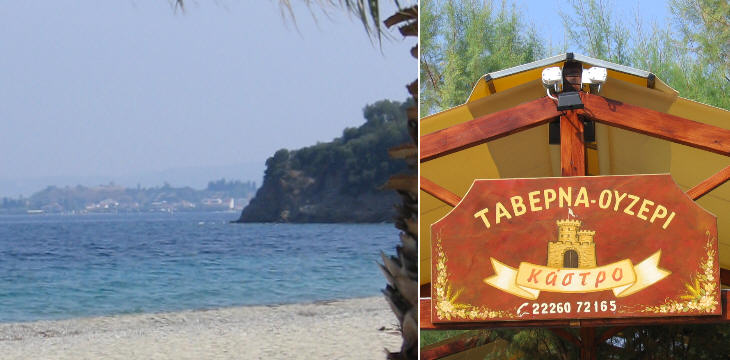
Today Oreo is a small and peaceful coastal town surrounded by olive-groves.
A view from a certain distance shows why the site was chosen to control the channel.
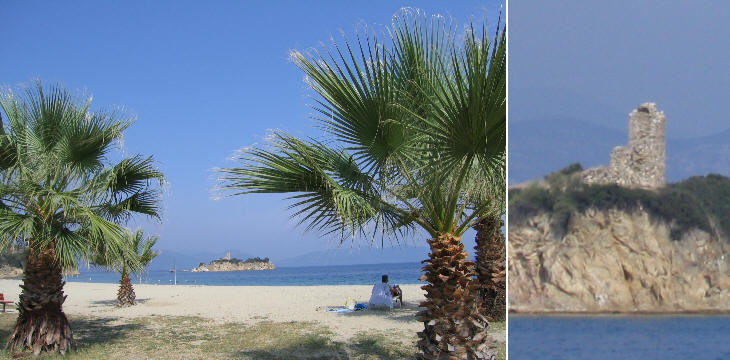
The system of defence was completed by towers in key points of the channel for the early detection of enemies. Introductory page on the Venetian Fortresses Pages of this section: On the Ionian Islands: Corfù (Kerkyra) Paxo (Paxi) Santa Maura (Lefkadas) Cefalonia (Kephallonia) Asso (Assos) Itaca (Ithaki) Zante (Zachintos) Cerigo (Kythera) On the mainland: Butrinto (Butrint) Parga Preveza and Azio (Aktion) Vonizza (Vonitsa) Lepanto (Nafpaktos) Atene (Athens) On Morea: Castel di Morea (Rio), Castel di Rumelia (Antirio) and Patrasso (Patra) Castel Tornese (Hlemoutsi) and Glarenza Navarino (Pilo) and Calamata Modon (Methoni) Corone (Koroni) Braccio di Maina, Zarnata, Passavà and Chielefà Mistrà Corinto (Korinthos) Argo (Argos) Napoli di Romania (Nafplio) Malvasia (Monemvassia) On the Aegean Sea: Negroponte (Chalki) Castelrosso (Karistos) Oreo Lemno (Limnos) Schiatto (Skiathos) Scopello (Skopelos) Alonisso Schiro (Skyros) Andro (Andros) Tino (Tinos) Micono (Mykonos) Siro (Syros) Egina (Aegina) Spezzia (Spetse) Paris (Paros) Antiparis (Andiparos) Nasso (Naxos) Serifo (Serifos) Sifno (Syphnos) Milo (Milos) Argentiera (Kimolos) Santorino (Thira) Folegandro (Folegandros) Stampalia (Astipalea) Candia (Kriti) You may refresh your knowledge of the history of Venice in the Levant by reading an abstract from the History of Venice by Thomas Salmon, published in 1754. The Italian text is accompanied by an English summary. Clickable Map of the Ionian and Aegean Seas with links to the Venetian fortresses and to other locations (opens in a separate window) |