  What's New! Detailed Sitemap All images © by Roberto Piperno, owner of the domain. Write to romapip@quipo.it. Text edited by Rosamie Moore. Page added in July 2007. |
 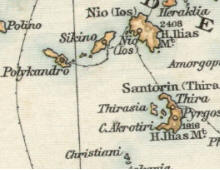 Folegandros Folegandros
Key dates: 1207 Marco Sanudo, a Venetian adventurer, conquered Nasso and the nearby islands including Folegandros 1566 The last Duke of Nasso, Jacopo IV Crispo was cashiered by the Sultan 1645-69 During the War of Candia the Venetians often controlled the Cyclades including Folegandros
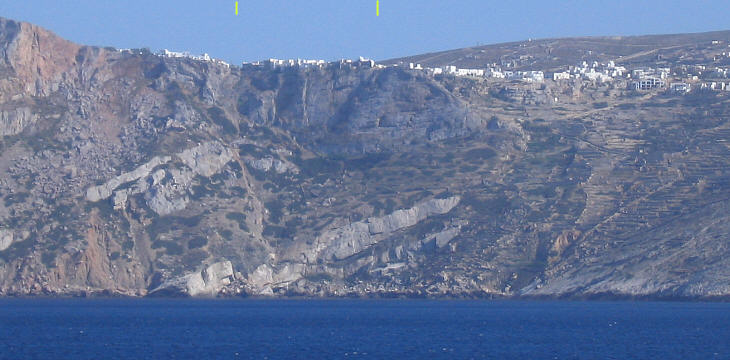
The fortified village was built on the edge of a ravine on the eastern coast of the island: the two yellow lines indicate the limits of the Venetian settlement.
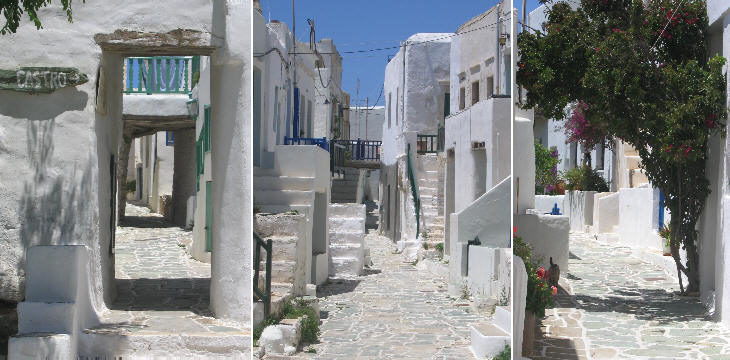
The houses were aligned one next to the other with only one entrance to the village: its design is very similar to that of Andiparis.
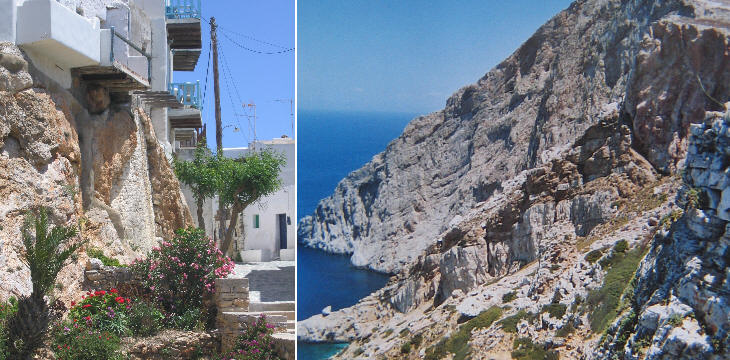
The site was carefully chosen to provide maximum protection with limited effort: the ravine on the western side of the village was very deep and the coast below did not allow the enemy to land: a rock protected the northern side; these simple defences were meant to protect the inhabitants from raids of the Ottoman corsairs.
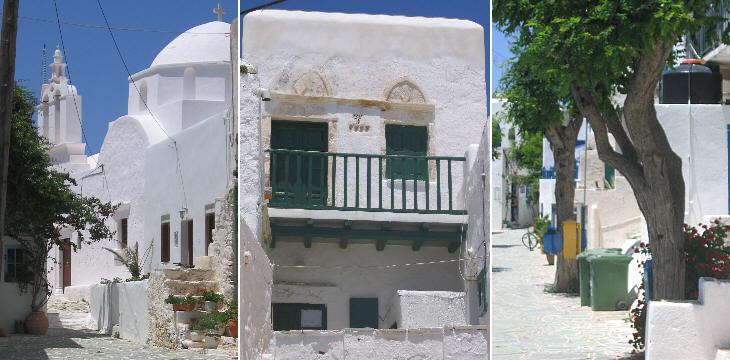
Folegandro attracts many holidaymakers who find it a pleasant and quiet alternative to other very busy Cycladic Islands: the village has some nice piazzas where it is nice to sip a Greek frappé at one of their cafès. The image in the background of this page shows a relief above the entrance of a church. Introductory page on the Venetian Fortresses Pages of this section: On the Ionian Islands: Corfù (Kerkyra) Paxo (Paxi) Santa Maura (Lefkadas) Cefalonia (Kephallonia) Asso (Assos) Itaca (Ithaki) Zante (Zachintos) Cerigo (Kythera) On the mainland: Butrinto (Butrint) Parga Preveza and Azio (Aktion) Vonizza (Vonitsa) Lepanto (Nafpaktos) Atene (Athens) On Morea: Castel di Morea (Rio), Castel di Rumelia (Antirio) and Patrasso (Patra) Castel Tornese (Hlemoutsi) and Glarenza Navarino (Pilo) and Calamata Modon (Methoni) Corone (Koroni) Braccio di Maina, Zarnata, Passavà and Chielefà Mistrà Corinto (Korinthos) Argo (Argos) Napoli di Romania (Nafplio) Malvasia (Monemvassia) On the Aegean Sea: Negroponte (Chalki) Castelrosso (Karistos) Oreo Lemno (Limnos) Schiatto (Skiathos) Scopello (Skopelos) Alonisso Schiro (Skyros) Andro (Andros) Tino (Tinos) Micono (Mykonos) Siro (Syros) Egina (Aegina) Spezzia (Spetse) Paris (Paros) Antiparis (Andiparos) Nasso (Naxos) Serifo (Serifos) Sifno (Syphnos) Milo (Milos) Argentiera (Kimolos) Santorino (Thira) Folegandro (Folegandros) Stampalia (Astipalea) Candia (Kriti) You may refresh your knowledge of the history of Venice in the Levant by reading an abstract from the History of Venice by Thomas Salmon, published in 1754. The Italian text is accompanied by an English summary. Clickable Map of the Ionian and Aegean Seas with links to the Venetian fortresses and to other locations (opens in a separate window) |