  What's New! Detailed Sitemap All images © by Roberto Piperno, owner of the domain. Write to romapip@quipo.it. Text edited by Rosamie Moore. Page added in July 2007. |
  Paxo (Paxi) Paxo (Paxi)
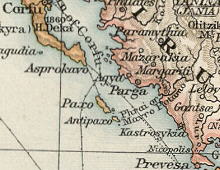
Paxi is a small island which is thought to have followed the same historical development as nearby Corfu: usually it was considered as one of the smaller islands around Corfu, but in the late XVIIIth century it was regarded as a component of the Eptanese (seven Islands) Republic which included also Santa Maura, Cefalonia, Itaca, Zante and Cerigo.
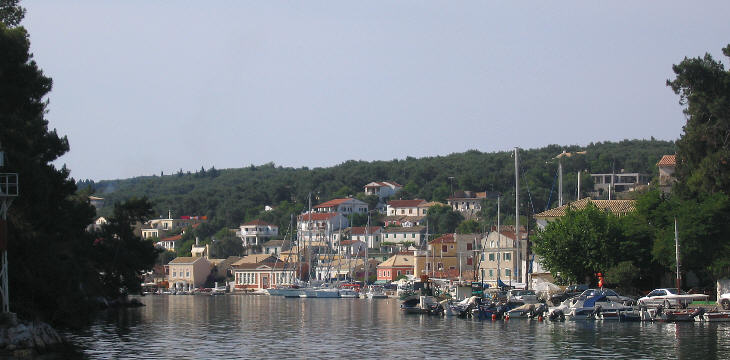
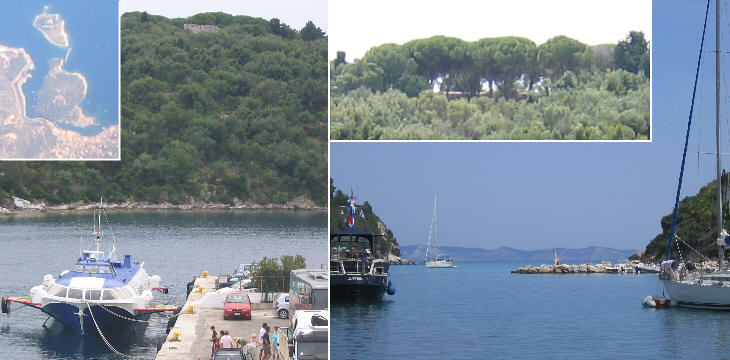
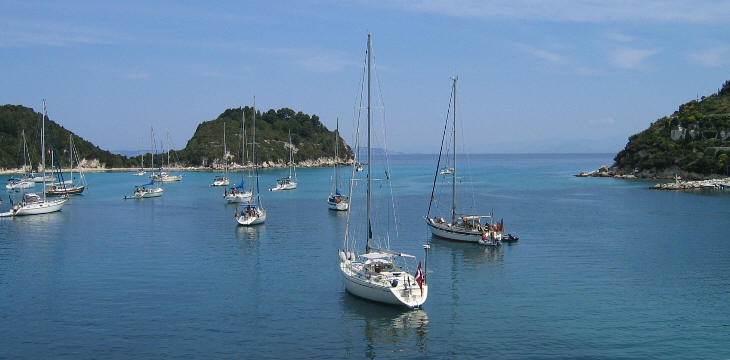
S. Nicolò (Gaios), the main village of the island is located on its eastern coast and it faces the mainland where the Venetians had an outpost at Parga. An islet opposite S. Nicolò shelters its harbour from winds and rough sea.
The Venetians built at the top of the islet a small fortress, which is now surrounded by high pines.
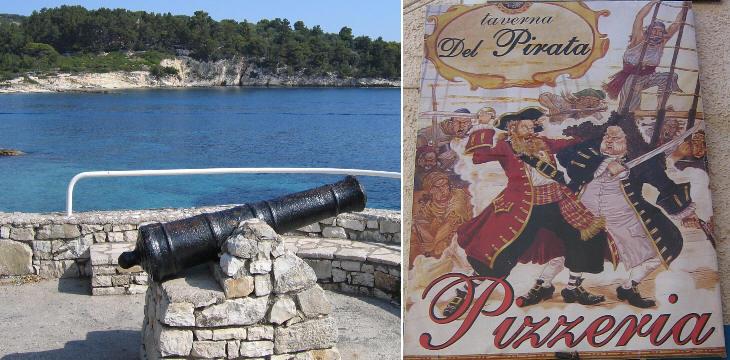
The fortifications built by the Venetians could not protect the inhabitants from a well organized invasion; their objective was to deter Ottoman corsairs from raiding the village: Khayr al Din Barbarossa (red beard) (1465-1546) was the most famous of these corsairs: the red bearded pirate portrayed on the poster of a pizzeria is most likely a reference to him.
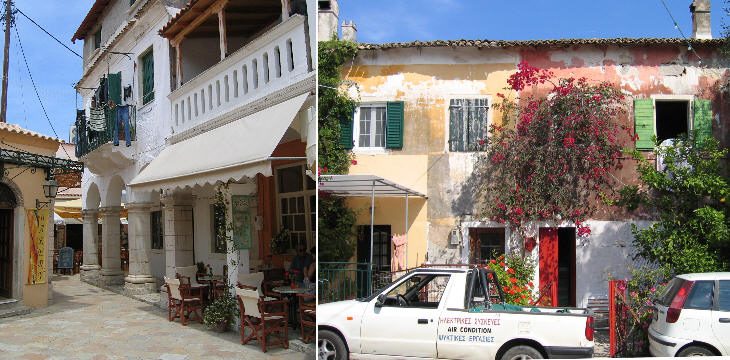
Even in the small village of S. Nicolò there is a distinct Venetian atmosphere (for more of this see the old town of Corfu).
Paxo has another very protected natural harbour at its northern end. The image in the background of this page shows a bell tower in Porto S. Nicolò. Excerpts from Memorie Istoriografiche del Regno della Morea Riacquistato dall'armi della Sereniss. Repubblica di Venezia printed in Venice in 1692 and related to this page:
Introductory page on the Venetian Fortresses Pages of this section: On the Ionian Islands: Corfù (Kerkyra) Paxo (Paxi) Santa Maura (Lefkadas) Cefalonia (Kephallonia) Asso (Assos) Itaca (Ithaki) Zante (Zachintos) Cerigo (Kythera) On the mainland: Butrinto (Butrint) Parga Preveza and Azio (Aktion) Vonizza (Vonitsa) Lepanto (Nafpaktos) Atene (Athens) On Morea: Castel di Morea (Rio), Castel di Rumelia (Antirio) and Patrasso (Patra) Castel Tornese (Hlemoutsi) and Glarenza Navarino (Pilo) and Calamata Modon (Methoni) Corone (Koroni) Braccio di Maina, Zarnata, Passavà and Chielefà Mistrà Corinto (Korinthos) Argo (Argos) Napoli di Romania (Nafplio) Malvasia (Monemvassia) On the Aegean Sea: Negroponte (Chalki) Castelrosso (Karistos) Oreo Lemno (Limnos) Schiatto (Skiathos) Scopello (Skopelos) Alonisso Schiro (Skyros) Andro (Andros) Tino (Tinos) Micono (Mykonos) Siro (Syros) Egina (Aegina) Spezzia (Spetse) Paris (Paros) Antiparis (Andiparos) Nasso (Naxos) Serifo (Serifos) Sifno (Syphnos) Milo (Milos) Argentiera (Kimolos) Santorino (Thira) Folegandro (Folegandros) Stampalia (Astipalea) Candia (Kriti) You may refresh your knowledge of the history of Venice in the Levant by reading an abstract from the History of Venice by Thomas Salmon, published in 1754. The Italian text is accompanied by an English summary. Clickable Map of the Ionian and Aegean Seas with links to the Venetian fortresses and to other locations (opens in a separate window) |