  What's New! Detailed Sitemap All images © by Roberto Piperno, owner of the domain. Write to romapip@quipo.it. Text edited by Rosamie Moore. Page added in September 2006. |
 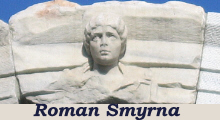 Roman Smyrna Roman Smyrna(relief portraying Annia Faustina, Marcus Aurelius' wife in the market portico) Smyrna, today Izmir, is located at the end of a deep gulf of Turkey's Aegean coast. Archaeologists have found evidence of a very ancient village not far from the site where settlers from the island of Mytilini (or Lesbos) established a colony in the Xth century BC. It was named Myrine, after a goddess who was worshipped in that part of the ancient world; the main town of the not so distant island of Limnos is called Myrina too.
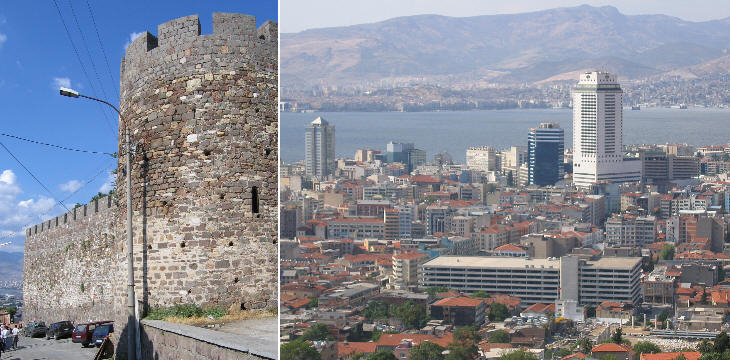
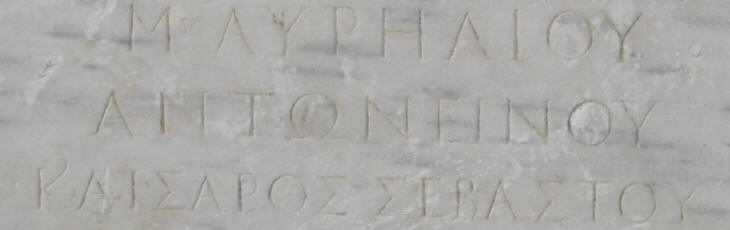
The acropolis of ancient Smyrna was built on a high hill near the sea by Alexander the Great in 334 BC when he relocated the inhabitants of the town from the northern to the southern part of the bay: the coast line was modified during the centuries by the deposits of clay, silt and sand left by a river (and more recently by the expansion of modern Izmir). The current fortress was built by the Byzantines and strengthened by the Ottomans. It is known as Kadifekale (Velvet Castle) and from there one can see the market square rebuilt by Emperor Marcus Aurelius after an earthquake destroyed Smyrna in 178 AD. The ancient harbour was located to the left of the market.
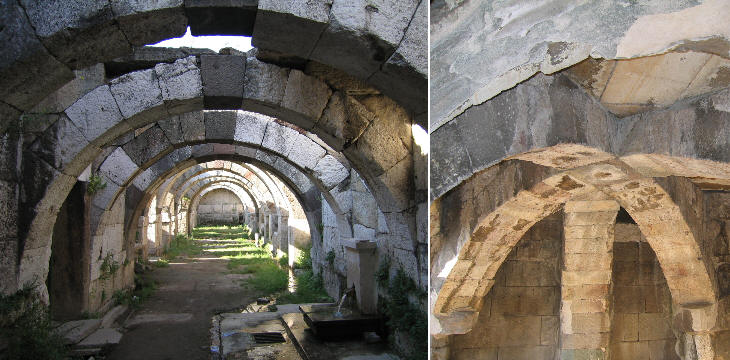
The new market place (in Greek agorà) built after the earthquake was a very large square surrounded on three sides by porticoes and on one by a basilica. It was located on the slope of the hill and the whole area was terraced. For this reason the entrances from the lower city (northern side of the market) were placed under the basilica.
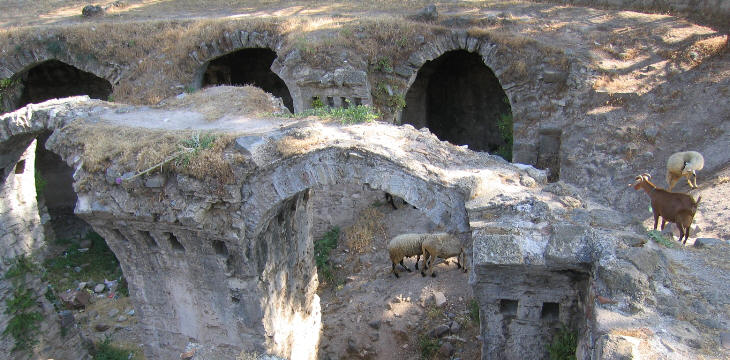
The whole market was supported by a net of vaulted underground passages which had the objective of reducing the impact of earthquakes. The arch keystones were identified by a different colour.
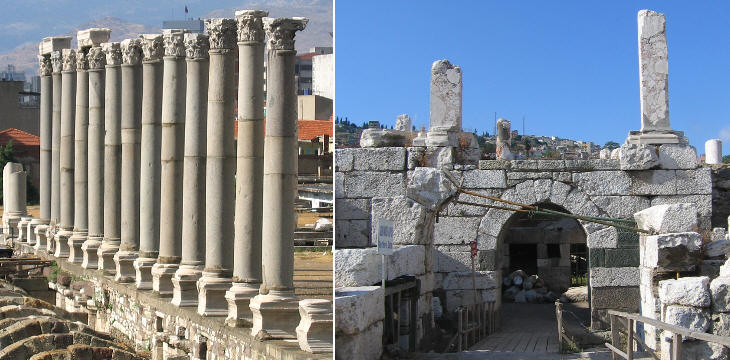
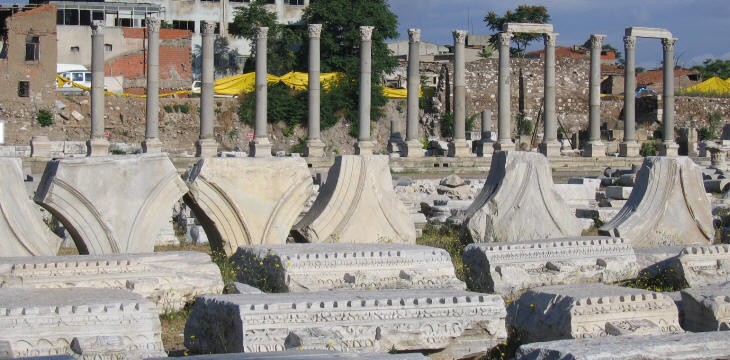
The design of the portico (in Greek stoà) had a mixture of Greek and Roman features which was typical of Emperor Hadrian's taste: they were decorated with rows of columns, but the actual building was based on a series of arches: a couple of them have been reconstructed with the assistance of the French Archaeological Mission of Izmir. Another aspect of the new market was the combination of materials having different colours. Grey granite columns supporting white marble capitals can also be seen in the Pantheon of Rome.
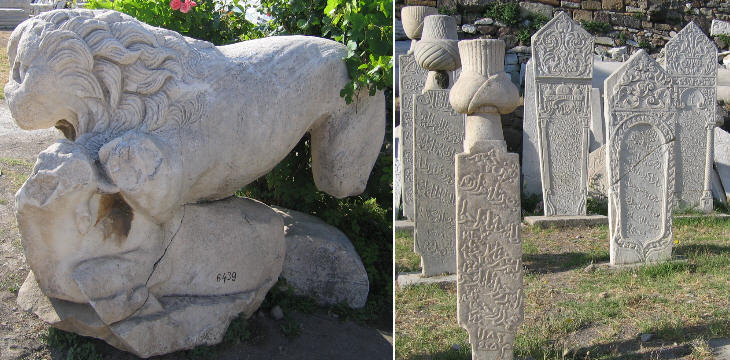
The southern and eastern porticoes lie under the dwellings which over the centuries were built on the site of the ancient market. The visible part of the market is due to the fact that it was used as a cemetery, both by the Byzantines and the Ottomans. On a visit to the archaeological site one can see some ancient statues together with finely engraved Ottoman tombstones. It was a cemetery reserved for the wealthiest families and the social rank of the dead was identified by a different kind of turban. The image used as background for this page shows a detail of a Roman relief portraying Medusa.
Roman Smyrna could rely on an ample supply of water: Roman engineers were able to pump water to the top of the hill (as they did in Pergamum). The water was stored in a large underground cistern from which a net of conduits led it to the various fountains and baths of the lower city. The first western travellers who reported about the cistern were so impressed by its vaults that they thought it was a large underground basilica. Modern Izmir has more than 3,000,000 inhabitants: in recent years many immigrants came from the poor and rural districts of eastern Anatolia and some of them settled with their sheep and goats in the area near Kadifekale. By walking down the three miles which separate Kadifekale from Alsançak, where the best shops and restaurants are located, one can experience a journey through the striking differences of modern Turkey.

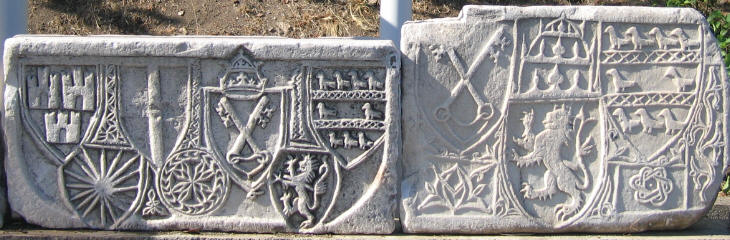
Between 1344 and 1402 Smyrna was a possession of the Knights of Rhodes. The Archaeological Museum of Izmir, where one can see many interesting works of art from Afrodisias and Ephesus, has also a couple of reliefs which decorated the entrance to the castle. Move to the Archaeological Museum of Izmir. Clickable Map of the Ionian and Aegean Seas with links to other locations covered in this website (opens in a separate window) Clickable Map of Turkey showing all the locations covered in this website (opens in another window).  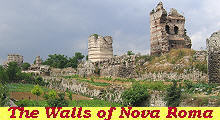  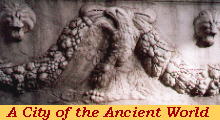 |