  What's New! Detailed Sitemap All images © by Roberto Piperno, owner of the domain. Write to romapip@quipo.it. Text edited by Rosamie Moore. Page revised in April 2015. |
 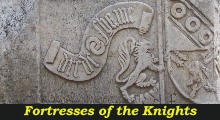 Ancient Kos Ancient Kos(relief in the fortress of Bodrum)
The findings of some early excavations during the Ottoman rule are on display at the Archaeological Museum of Istanbul. In 1933 an earthquake greatly damaged the older part of Kos; it was soon evident that most of the fallen dwellings were built directly upon the foundations of ancient temples and markets. This led to a large campaign of excavations which was extended also to the outskirts of Kos. The archaeologists did not have far to dig before identifying two other areas with significant memories of the ancient town.
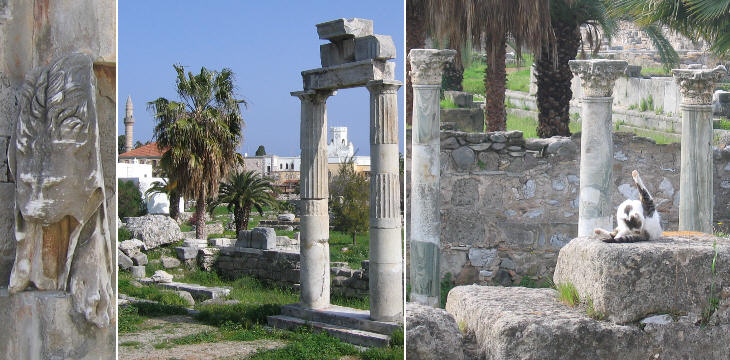
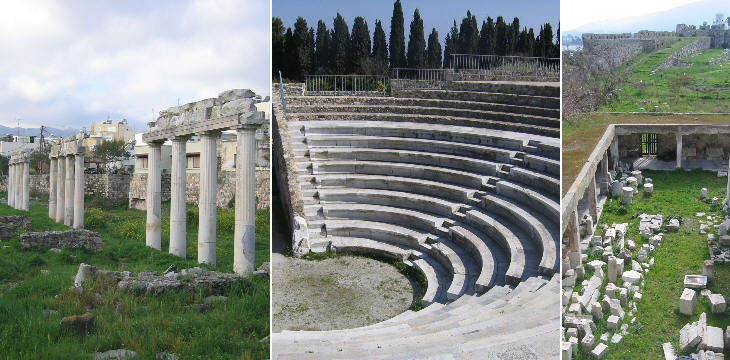
The park which today replaces most of the medieval town was the commercial and political centre of Ancient Kos. Archaeologists have found evidence of a large market square surrounded by porticoes and temples; these were initially designed in the Hellenistic period (usually defined between the death of Alexander the Great in 323 BC and the annexation of Greece by Rome in 146 BC), but they were rebuilt or modified during the Roman rule over the island. The use of cipollino columns from Euboea is typical of the time of Emperor Hadrian.
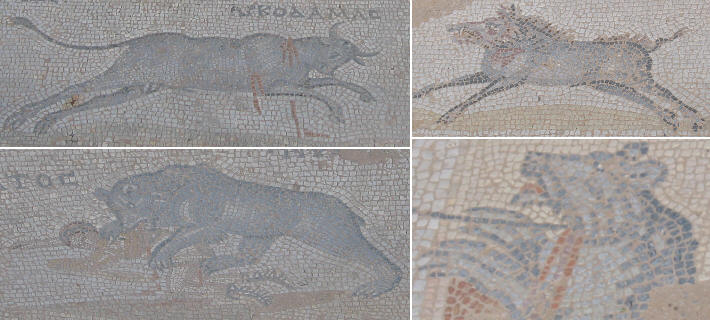
The excavation in the suburban areas of Ancient Kos led to interesting findings: several large Roman houses which were decorated with very well preserved coloured mosaics.
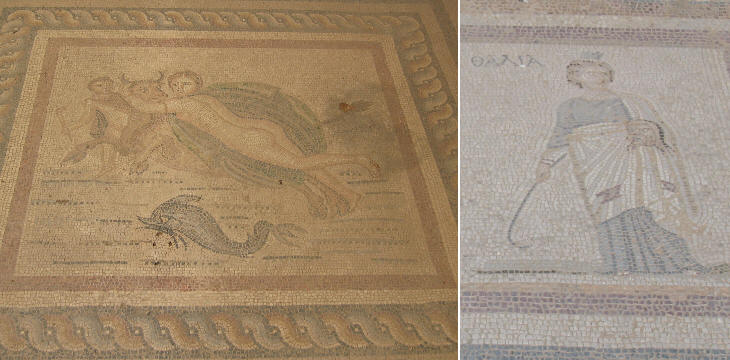
The mosaics portray a variety of subjects taken both from actual life and from Greek mythology. Today's geography places Kos at the very border between Europe and Asia: it is therefore interesting to see a mosaic portraying the abduction of Europe by Jupiter (in bull form).
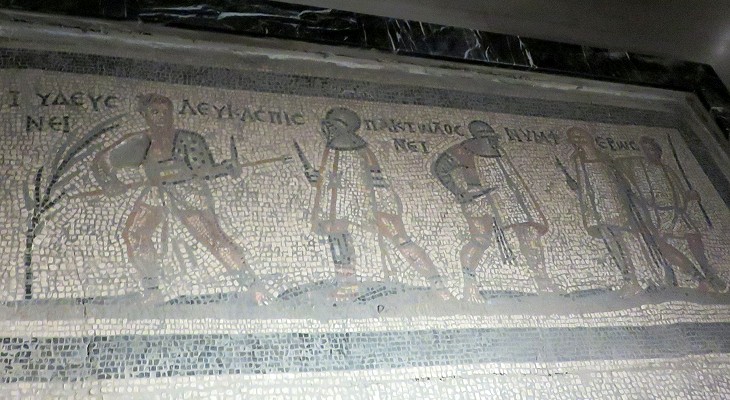
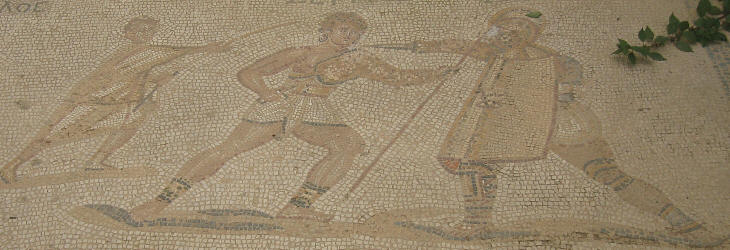
Hunting scenes were always among the preferred subjects of Roman mosaics: the inhabitants of Ancient Kos enjoyed viewing a sort of Mel Gibson movie in the courtyards of their homes (which we may compare to today's living rooms): mosaics depicted a wide array of scenes showing wild animals or men in the last moments of their life, with blood spilling all over the place (see other Roman mosaics in Antioch and Representation of Death in the churches of Rome).
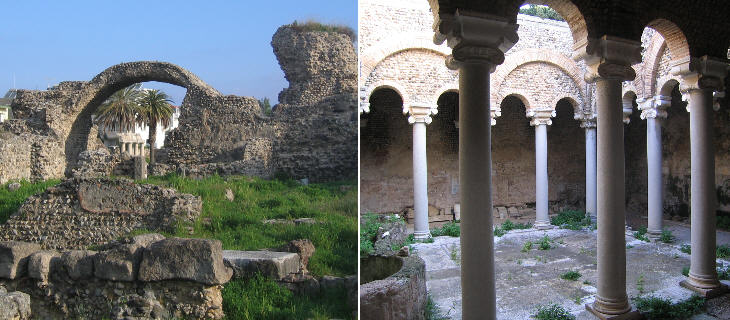
The Romans built an aqueduct from the hills to the south of Kos to supply the town baths: there were at least three major baths, one of which was located next to the harbour. Baths had very elegant conveniences with running water (see other Roman latrines in Hierapolis and Ostia).
Kos had all the main buildings you expect to see in an ancient town: a stadium, a theatre, schools of different grades, paved streets: archaeologists found so many capitals, altars, reliefs that those which were not deemed to deserve a place in the small archaeological museum were stored in the fortress. The image used as background for this page shows a detail of a Roman mosaic portraying a bullfight. Move to: Introductory page Rhodes: the Gates Rhodes: the fortifications Rhodes: the town of the Knights Rhodes: Byzantine, Ottoman and Jewish memories Rhodes: modern Italian architecture Kos: the fortress St Peter's Castle (Bodrum) Castelrosso Calimno Lero Symi Nissiros Lindos Other fortresses Fortress of the Orthodox church Patmo (Patmos) Clickable Map of the Ionian and Aegean Seas with links to other locations covered in this website (opens in a separate window)     |