  What's New! Detailed Sitemap All images © by Roberto Piperno, owner of the domain. Write to romapip@quipo.it. Text edited by Rosamie Moore. Page added in November 2006. |
  Lero (Leros) Lero (Leros)(relief in the fortress of Bodrum) Key dates: 1310 The island was acquired by the Knights of Jerusalem, who after having lost their possessions in Palestine and Syria, resettled on Rhodes and the nearby islands. 1457/1460/1502/1505 Ottoman attempts to seize the island 1522 Sultan Suleyman the Magnificent conquered Rhodes and the other possessions of the Knights 1648 The Venetians briefly seized the island 1912-43 Italian rule
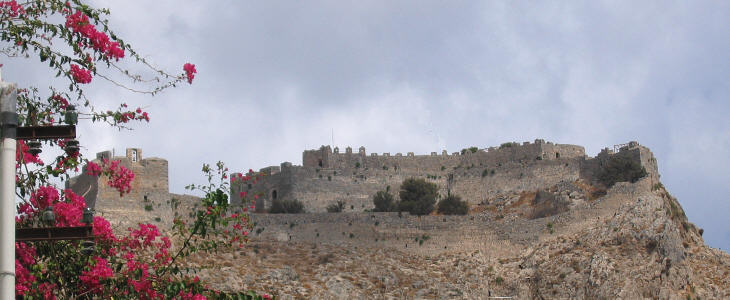
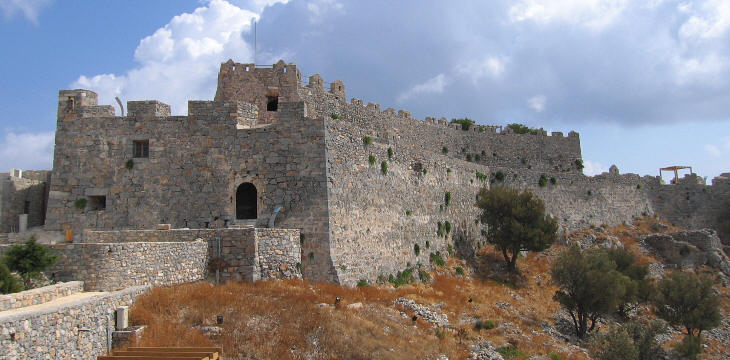
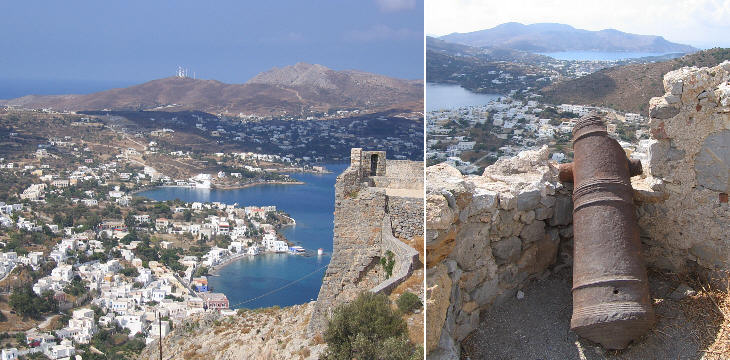
The fortress of Lero is located on a high rock on the eastern coast of the island: it has three enclosures: the fortress was enlarged and strengthened by the Grand Master Emmery d'Amboise (1503-1512).
According to a legendary account in 1505 (or 1506) the Ottoman corsair Kemal Rais landed at night with 500 men at Lero and hid until dawn: he then tried to take the fortress by surprise when its defenders left to go farming. There was only one knight left in the fortress; when he saw the Ottomans he dressed the women and the children in armour and they all made their appearance on the top of the walls; the Ottomans thought it better to abandon their plan and left the island. A boat which makes a tour of the island is named after Khayr al Din (1465-1546), an Ottoman corsair best known as Barbarossa for his red beard (see image used as background for this page).
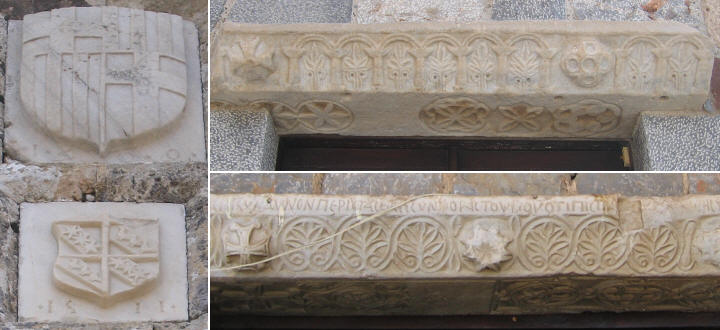
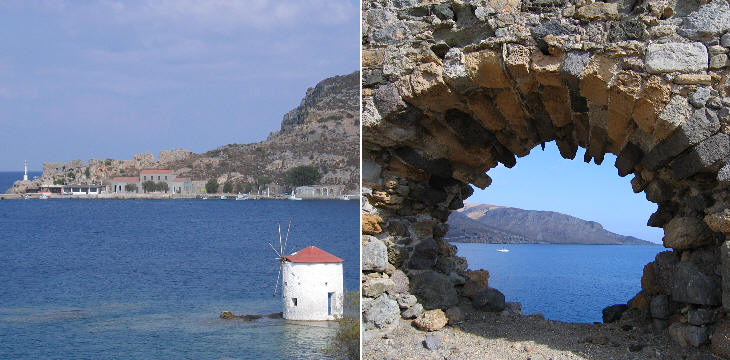
The fortress retains some memories of the Knights' rule as well as some very old churches; the upper part of the fortress however was damaged during WWII: the Italians had fortified Lero and used one of its deep water bays as a base for their navy; after the capitulation of Italy in September 1943, the Germans launched several air strikes and eventually in November occupied the island.
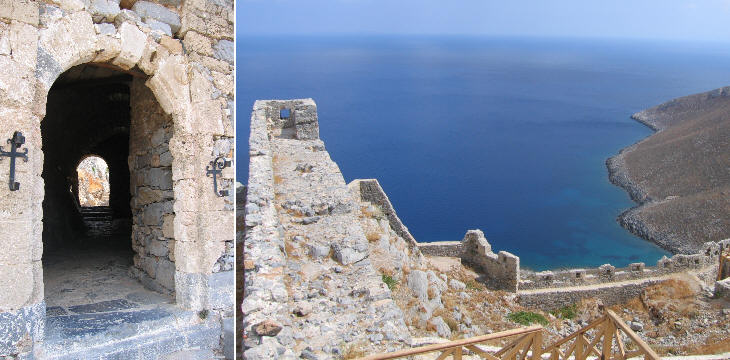
High cliffs protected the fortress from attacks coming from the sea while the three enclosures allowed the defenders to easily resist assaults from land, which they did on four occasions.
Lero is made up of the emerging part of a mountain range and at points where it extends into the sea it is very narrow: its many bays provide good natural harbours.
In 1648 the Venetians seized Lero and in the same period they occupied several other islands including Tenedo and Imbro from which they were able to block supplies en route to Constantinople. After the Venetians left these islands the Ottomans strengthened their fortifications on some of them including Lero where a small castle was built to protect the access to the bay nearest to the main fortress. Move to: The Knights of Rhodes - Introduction Rhodes: the Gates Rhodes: the fortifications Rhodes: the town of the Knights Rhodes: Byzantine, Ottoman and Jewish memories Rhodes: modern Italian architecture Kos: the fortress Kos: the ancient town St Peter's Castle (Bodrum) Castelrosso Calimno Symi Nissiros Lindos Other fortresses Fortress of the Orthodox church Patmo (Patmos) Clickable Map of the Ionian and Aegean Seas with links to other locations covered in this website (opens in a separate window) |