  What's New! Detailed Sitemap All images © by Roberto Piperno, owner of the domain. Write to romapip@quipo.it. Text edited by Rosamie Moore. Page revised in April 2015. |
 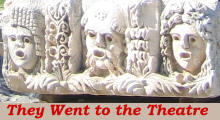 - Iasos - Iasos(theatrical masks at Myra) Iasos was located on a short peninsula at the end of a well protected bay between Didyma and Halicarnassus (Bodrum).
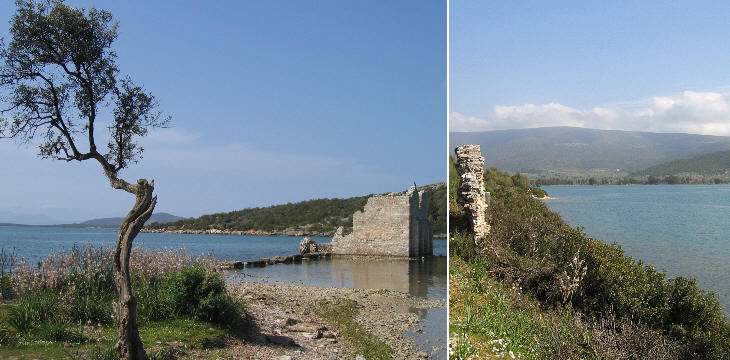
The peninsula formed two harbours; the western one offered excellent protection to ships; most likely the tower at the end of the breakwater was built in the VIIth century AD as a defence against Arab raids. Iasos was surrounded by walls, of which only minor stretches remain. This because in 1889 the ancient site was used as a quarry for building a pier at Bebek, near Rumeli Hisar; stone benches from the theatre of Iasos were also used for this purpose.
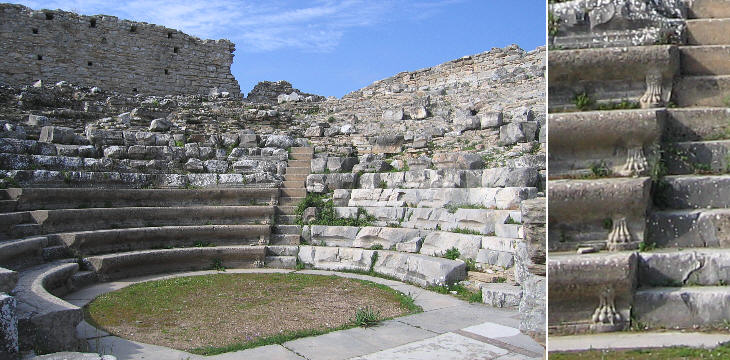
In 1889 the lower part of the bouleuterion of Iasos was covered by earth so its benches were not removed. It was built before 125 BC when Iasos became part of the Roman province of Asia, but it was modified in the Ist and IInd centuries AD. While the original purpose of the bouleuterion was to serve as the hall for assembly meetings, during the Roman rule it was mainly used as a theatre. It had vaulted underground passages which allowed the audience to easily reach assigned seats; the benches were decorated with lion paws.
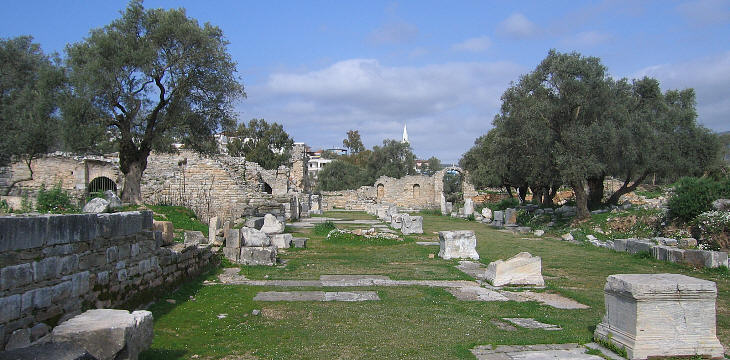
The agorà (marketplace) was entirely rebuilt at the time of Emperors Hadrian and Antoninus Pius: it had a rectangular shape and it was surrounded by porticoes and temples, which included a shrine dedicated to Artemis (Diana).
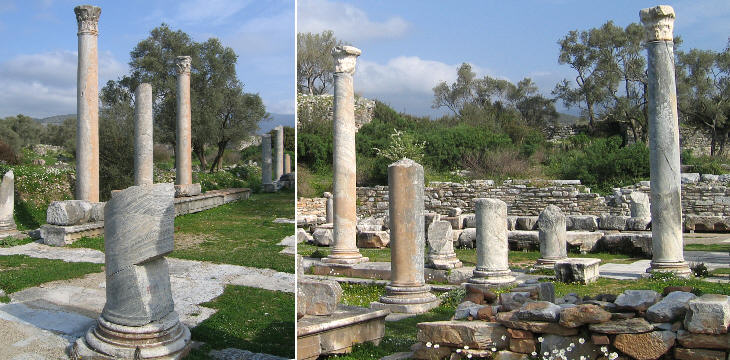
Even though Iasos was a minor town when compared with Miletus, Ephesus or Smyrna, its porticoes were made of stones which were not available locally; granite from Egypt, cipollino from Euboea, white marble from Paros and other stones gave the agorà a colourful appearance.
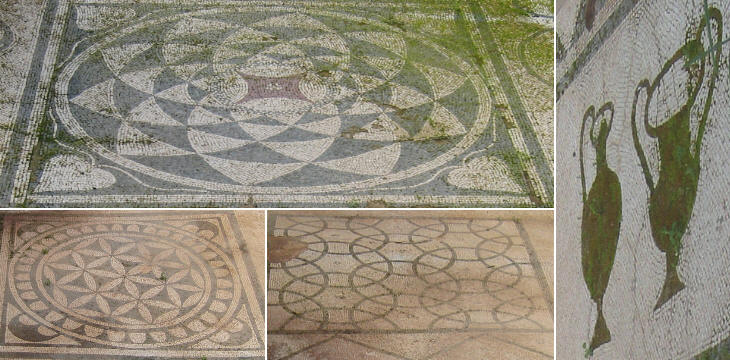
Archaeologists have found a residential area on the side of the town overlooking the sea. Excavations are yet to be completed but already several rooms of a villa have been unearthed. They were decorated with elaborate mosaics.
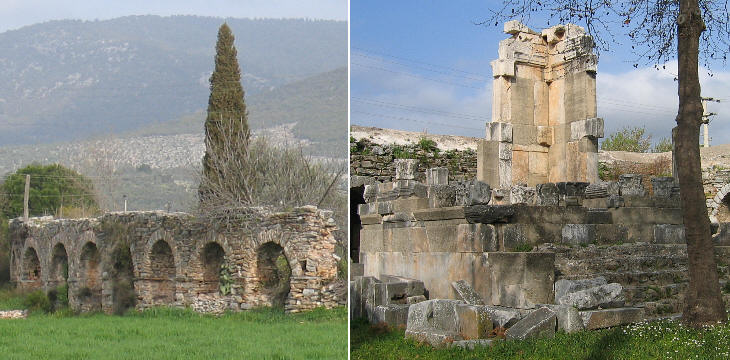
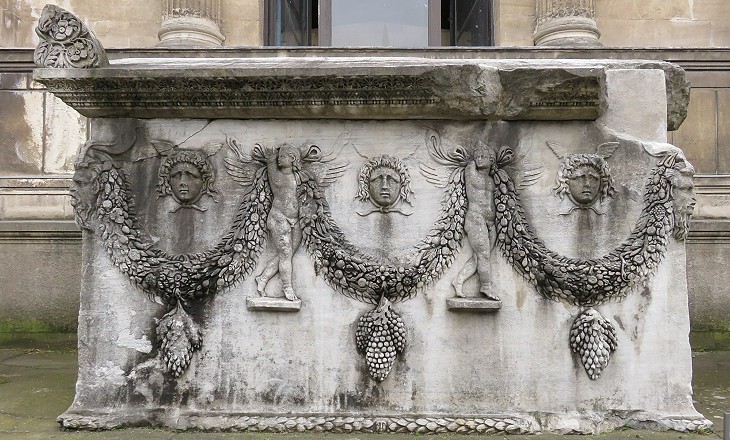
A Roman aqueduct provided Iasos with fresh water; some of its arches were incorporated into a courtyard which surrounded a Roman funerary monument: it had the appearance of a small temple on a very high podium.
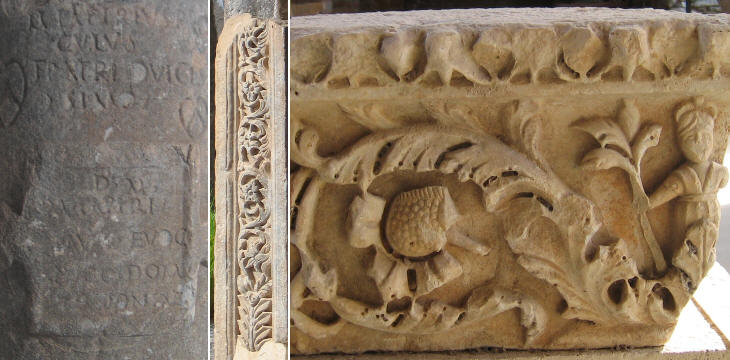
Today the courtyard surrounding the funerary monument houses a small museum with inscriptions, statues, altars and sarcophagi found in the excavations.
The archaeological area of Iasos is in the process of being surrounded by summer residences. It may soon lose the rural atmosphere the writer of this page enjoyed there on March 8, 2008.
The image used as background for this page shows the logo of the Italian Archaeological Mission in Iasos. Move to: Introductory page Miletus Priene Didyma Euromos Milas Kaunos Telmessos Tlos Xanthos Letoon Patara Antiphellos Simena Myra Phaselis Termessos Attalia (Antalya) Perge Aspendos Side Map of Turkey with all the locations covered in this website     |