  What's New! Detailed Sitemap All images © by Roberto Piperno, owner of the domain. Write to romapip@quipo.it. Text edited by Rosamie Moore. Page added in August 2012. |
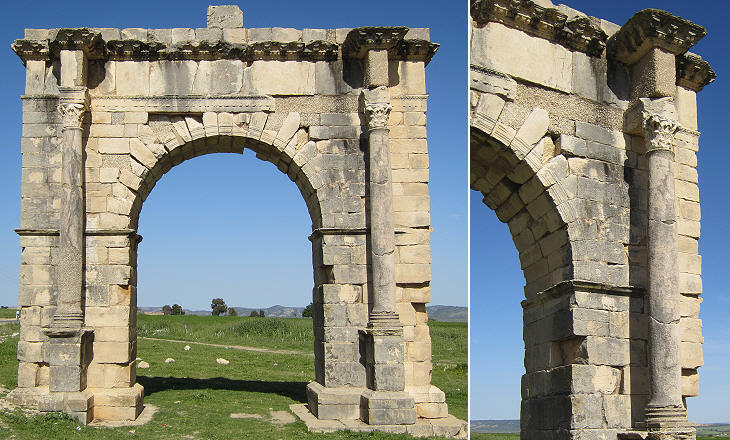
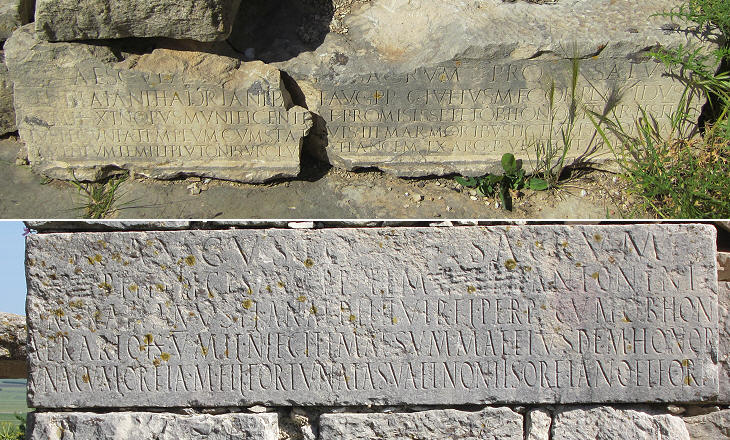
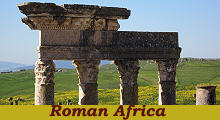 - Musti (El Krib) - Musti (El Krib)(temple at Thugga) Below Tubersoke (today's Teboursouk, near Thugga) is Musti where we have the remains of a beautiful triumphal arch; and upon a stone that might formerly belong to it there is the following inscription: "Invictissimo Felicissimoque Imperatori Augusto Caesari Orbis Pacatori Musticensium D(ecreto) D(ecurionum) P(ecunia) P(ublica)". From Travels or Observations relating to several parts of Barbary and the Levant by Thomas Shaw - 1808.
Although the ruins of ancient Musti (aka Mustis) were already identified in the early XIXth century they were and are almost neglected. The 1895 Murray Handbook did not mention the town and nor do most of today's guidebooks. Thus travellers en route to El-Kef (Sicca Veneria) are caught by surprise when they see a reconstructed arch to the left of the road. The arch marked the eastern entrance to the town. The inscription quoted by Shaw made reference to Emperor Tiberius, but the arch was built in 238 AD and it was dedicated to Gordian I who was emperor for only thirty-six days.
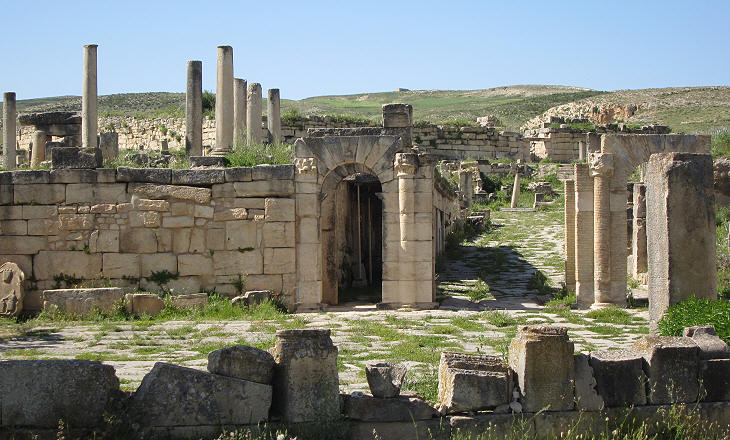
Marius, the Roman general who defeated Jugurtha, the Numidian king who attempted to oust the Romans from Africa, settled some of his veterans at Musti which was redesigned according to usual Roman patterns. Its covered market was built with a local white calcareous stone which adds to the beauty of its columns and arches. Musti was already a municipium (a town with self-government bodies) at the time of Emperor Augustus because its population included many Roman citizens.
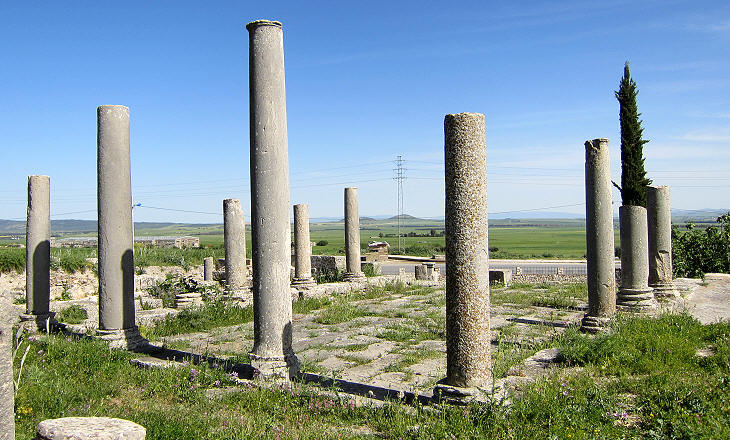
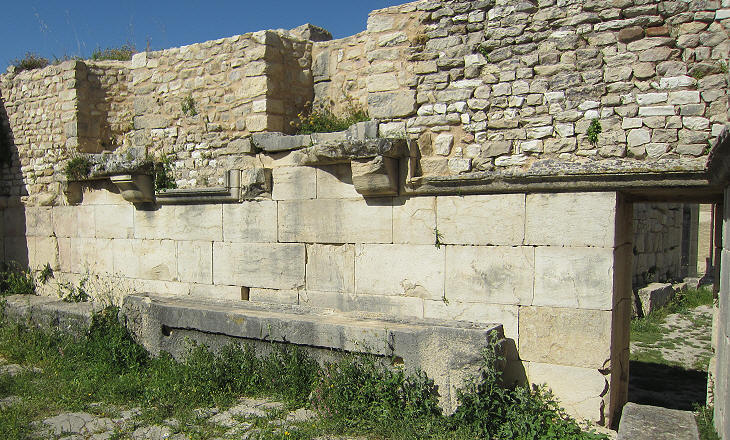
The economy of Musti relied on grain farming and one of the largest temples found by archaeologists in the centre of the town was dedicated to Ceres, the Roman goddess of agriculture and grain crops. This goddess was very important until the IInd century AD, when her cult declined in favour of eastern fertility goddesses. The photo shows the modern road behind the temple which links Tunis to El-Kef. At Musti it follows the route of the Roman road which linked Carthage to Theveste, a town in today's Algeria where Legio III Augusta was stationed.
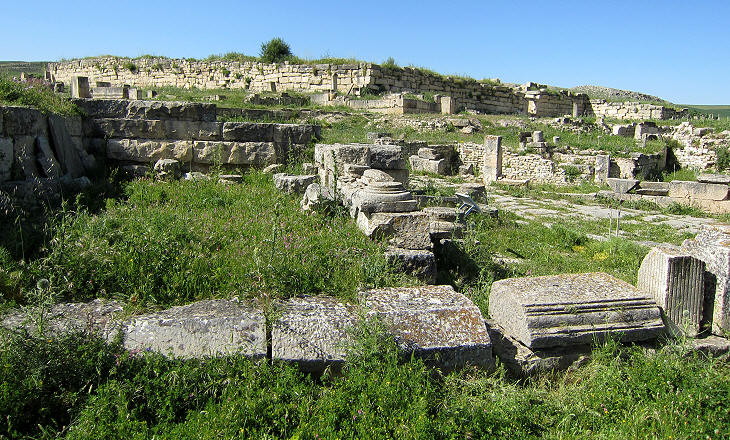
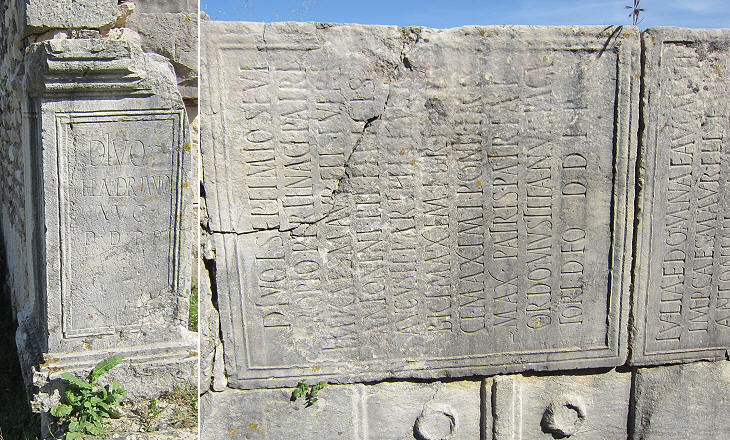
Usually temples to Pluto are associated with the underworld, but the Pluto worshipped at Musti was the protector of seeds and the epithet Urceus was a reference to a jar (It. orcio) of unlimited capacity, so he was the male counterpart of Ceres. The temple was decorated with statues and marbles at the time of Emperor Hadrian.
After the Byzantine conquest of the Province of Africa at the time of Emperor Justinian the fora of several towns were turned into small fortresses. (The fora) had been the heart of the classical city and could be reached from every part of the urban area. When transformed into fortresses, they were often large enough to accommodate soldiers, and potentially to serve as an emergency refuge for inhabitants. From Changing Townscapes in North Africa from Late Antiquity to the Arab Conquest by Anna Leone. It appears that at Musti some of the stones used for the fortifying the forum came from buildings which had been destroyed by the Vandals in the Vth century or during campaigns for the eradication of non-Christian beliefs.
Only three temples have been identified at Musti; that dedicated to Apollo was turned into a Christian chapel in the IVth century, probably at the time of Emperor Constantius II. From inscriptions we know that there was a temple to Asclepius, the god of medicine, and another one to Mercury, the god of trade. The forum probably housed a temple to Jupiter or a Capitolium, a temple to the three deities (Jupiter, Juno and Minerva) worshipped on the Capitol hill of Rome. Other "missing" temples are those dedicated to Saturn and Juno Caelestis, the Latin names given to Baal and Tanit, Phoenician gods. On the basis of evidence found at other towns such as Thugga and Thuburbo Majus, they were probably located out of town. Musti has not been entirely excavated.
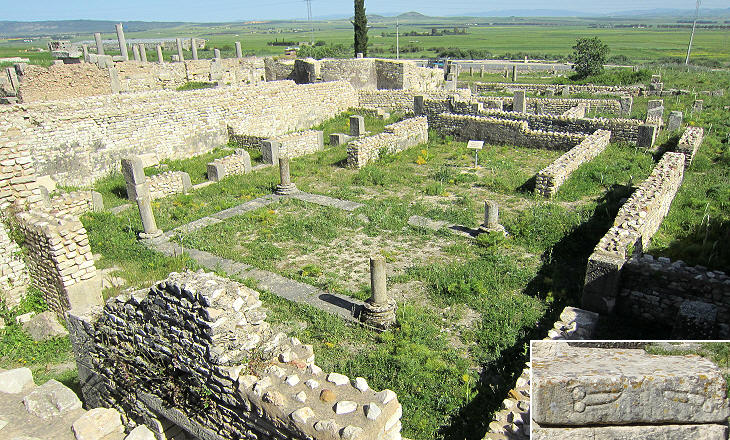
During my visit in April 2012 the ruins of Musti appeared in a state of total abandonment with no one checking the access to them. When I was wandering around the ancient buildings in total solitude, a young man materialized and offered his services as a guide, which I unwillingly accepted. Contrary to my expectations, he knew what he was talking about, but he could not refrain from labelling a large house near the Temple to Apollo as a brothel. This because of some reliefs found on nearby stones. According to local guides a brothel increases the importance of an archaeological site and raises the interest of its visitors (the same occurs at Thugga).
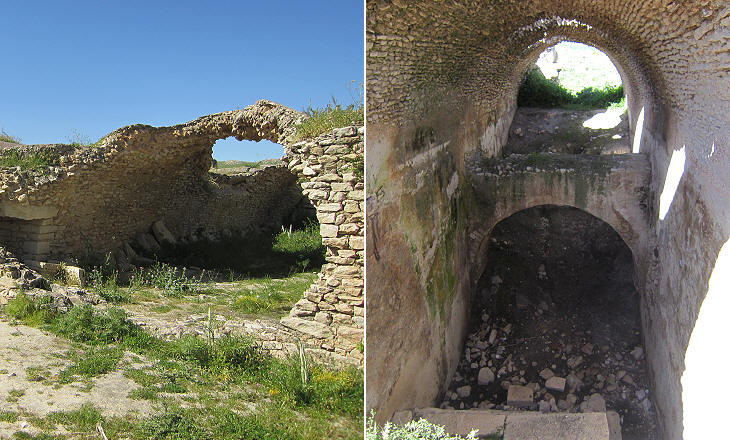
Archaeologists have identified the site of baths, a typical facility of a developed Roman town, but I was unable to find them as I did not see any large walls which usually indicate their location. Their existence however was indirectly confirmed by a series of long and deep cisterns behind the forum on slightly higher ground.
Many of the monuments in the Province of Africa were built at the initiative of local flamen, priests appointed to superintend the worship of the deified emperors. In origin the title was given to actual priests, but in the provinces it was given to wealthy citizens who regarded it as a great honour and in return embellished their towns.
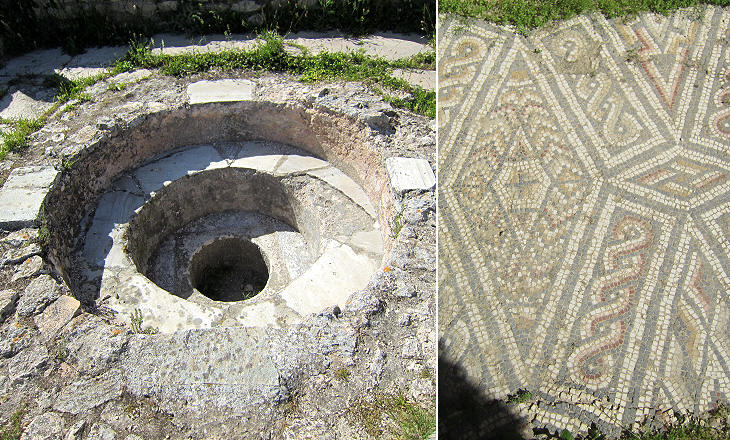
Archaeologists have identified the ruins of a Christian basilica near the Temple to Pluto. The baptistery was decorated with slabs of marble and, unlike most of those found elsewhere, it had a circular shape, rather than having the aspect of a cross as at Thuburbo Majus and other locations. The three steps leading down into the font were a symbol of the Trinity.
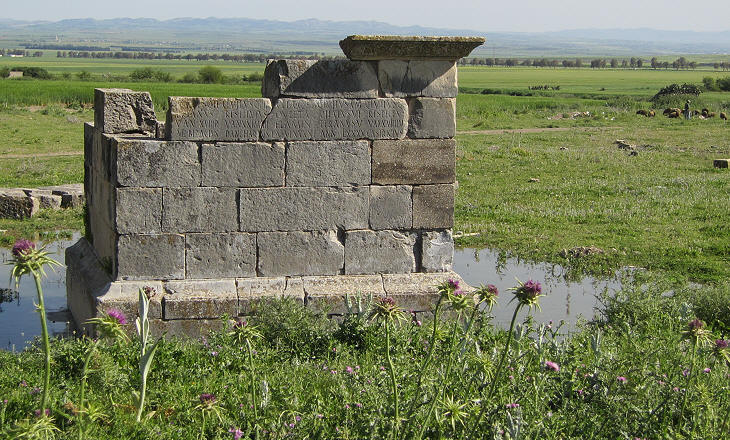
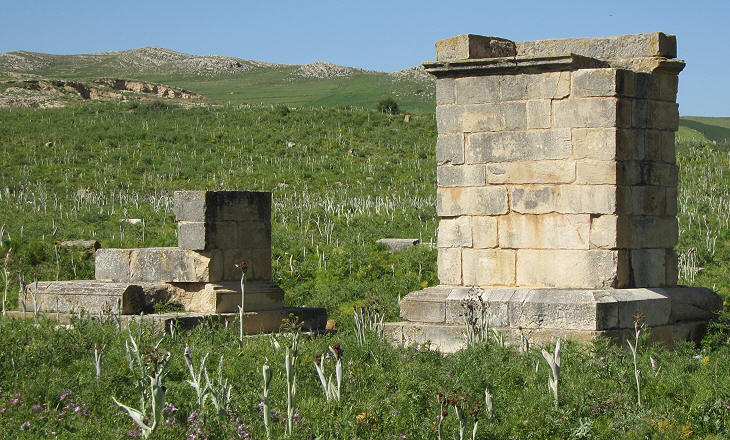
The mausoleum of a family near the Arch to Gordian (you can see them together in the introductory page) was decorated with a long inscription with the names and the ages of those whose ashes were housed inside the small building. From the inscription we learn that the Julii had a good set of genes because one of them reached the age of 91 - V(ixit) A(nnos) LXXXXI - as you can see in the image used as background for this page, a remarkable achievement for that time.
Musti was probably abandoned after the VIIth century Arab invasion, but its existence was not entirely forgotten because the site of its ruins was known as Mest Henchir, the ruins of Mest (Musti). Move to: Introductory Page Bulla Regia Carthago Mactaris Neapolis Sicca Veneria Simitthus Sufetula Thuburbo Majus Thugga Thysdrus Uthina Utica Ziqua Mosaics in the Museum of Bardo    
|