  What's New! Detailed Sitemap All images © by Roberto Piperno, owner of the domain. Write to romapip@quipo.it. Text edited by Rosamie Moore. | Porta Cavalleggeri (Book 1) (Map D2) (Day 8) (Rione Borgo)
In this page:
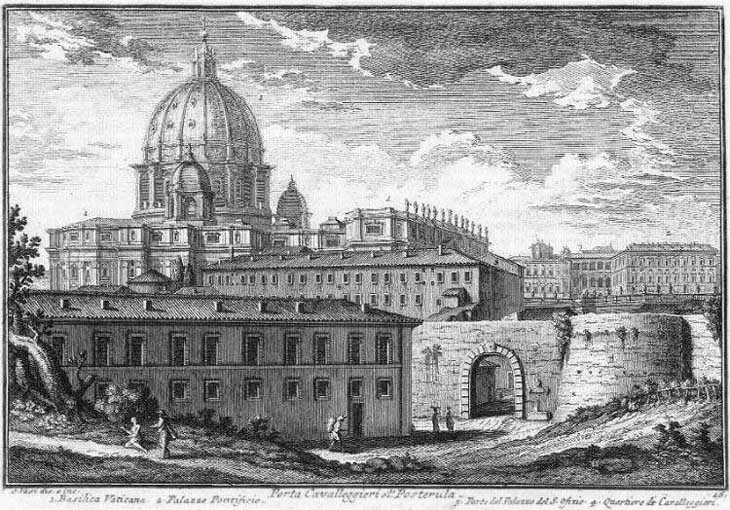
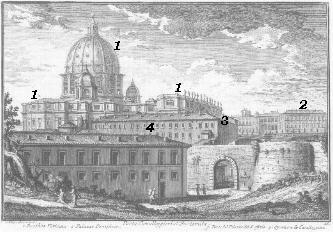
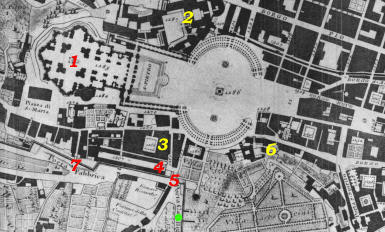
Giuseppe Vasi made his view of Porta Cavalleggeri much more interesting by taking it from a long distance away in order to show the dome of S. Pietro, which is better seen from the hill outside the gate, than from Piazza S. Pietro. Porta Cavalleggeri was also known as Porta in Torrione (large tower) owing to two circular towers at its sides; that on the left was pulled down by Pope Pius IV when he built new barracks for the papal cavalry. The long building outside the gate was a kiln; the bricks which were produced there were carried into the city through Porta Fabrica, a small gate to the left of Porta Cavalleggeri. The view is taken from the green dot in the small 1748 map here below. In the description below the plate Vasi made reference to: 1) Basilica Vaticana (S. Pietro); 2) Palazzo Apostolico; 3) Palazzo del Sant'Offizio o della Santa Inquisizione; 4) Quartiere dei Cavalleggeri (cavalry barracks). 1) and 2) are shown in other pages. The small map shows also: 5) Porta Cavalleggeri; 6) SS. Michele e Magno; 7) Porta Fabrica.
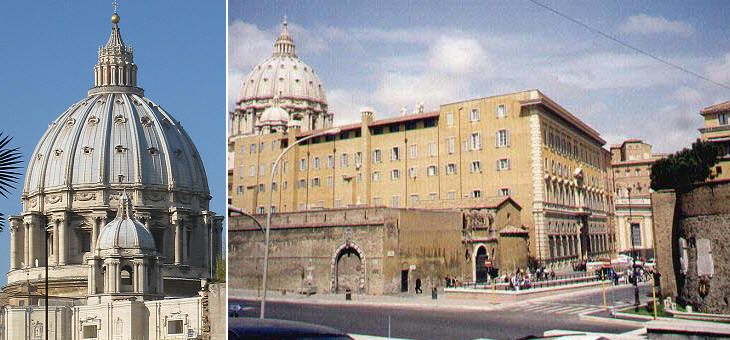
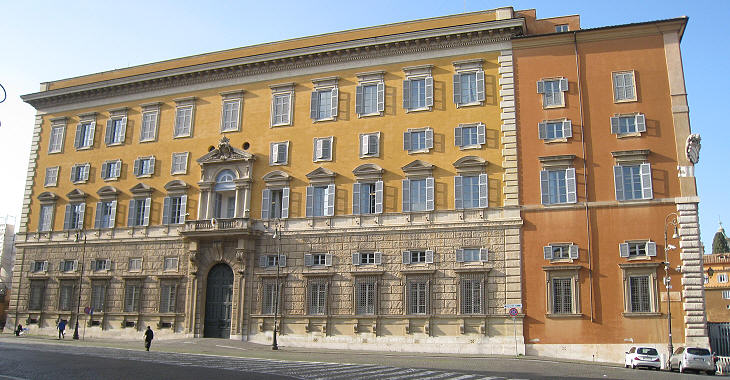
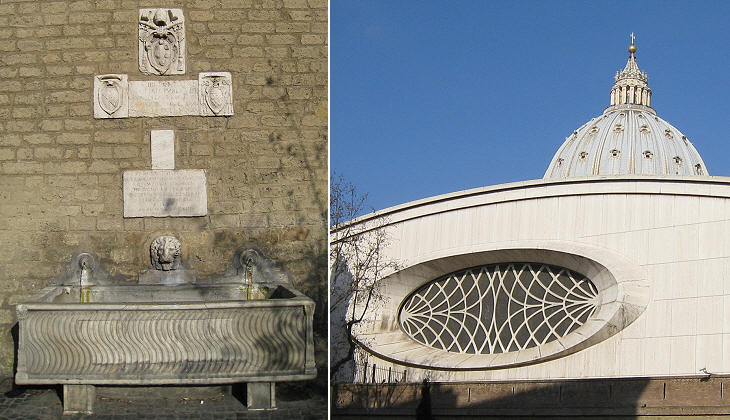
In 1904 a section of the walls which included Porta Cavalleggeri was pulled down in order to open a large street; the gate was rebuilt to the left of the street together with a small fountain which stood to the right of the gate (today to its left). Palazzo del Sant'Offizio was to a large extent rebuilt during the 1920s. The apse of Chiesa di S. Salvatore in Torrione, shown by Vasi inside the gate, is now in full view next to Palazzo del Sant'Uffizio. The church and the palace are inside Vatican City. Porta Cavalleggeri
The walls which surround the Vatican were rebuilt by Pope Pius IV, but Porta Cavalleggeri and the two towers which protected it belong to an earlier period; the towers are thought to have been built by Pope Nicholas V whereas the gate was designed at the time of Pope Alexander VI.
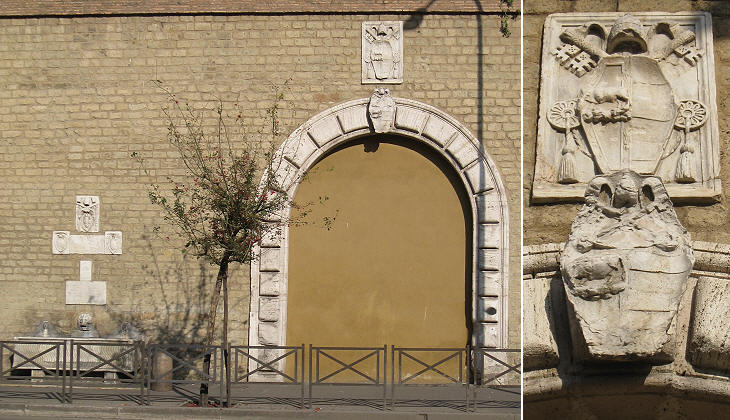
In 1542 Pope Paul III reorganized the Inquisition, the religious body in charge of identifying and sentencing heretical views. The official name of the institution, Sant'Offizio della Sacra Inquisizione, notwithstanding its references to holy and sacred, acquired such a dreadful reputation that in 1965 it was renamed Congregazione per la Dottrina della Fede by Pope John XXIII. The Roman Inquisition acquired a great importance during the pontificate of Pope Pius V who in 1571 bought a series of existing properties and turned them into the premises of this institution; they included a small jail (you can see the coat of arms of Pope Pius V in the image used as background for this page). However some of the most famous trials for which the Inquisition is known, such as those of Giordano Bruno and Galileo Galilei, were held in Convento della Minerva.
During the VIIIth century the Popes increased their contacts with the kingdoms which were founded in northern Italy and central Europe by Germanic tribes after the fall of the Western Roman Empire, while at the same time they reduced their links with the Byzantine emperors. When between 847 and 853 Pope Leo IV surrounded the Vatican with its first curtain of walls, the area around S. Pietro was almost entirely occupied by four large scholae, (compounds with churches, hospices and hospitals) which were named after the Franks, the Longobards, the Saxons and the Frisians; the Kingdom of Frisia was established in 600 ca. on the North Sea continental coast, from the mouth of the Rhine to today's Denmark. The Frisian schola was located near that of the Saxons and its church was dedicated to St. Michael; at a later date it was dedicated also to S. Magno, i.e. Magnus Forteman, a legendary leader of the Frisians.
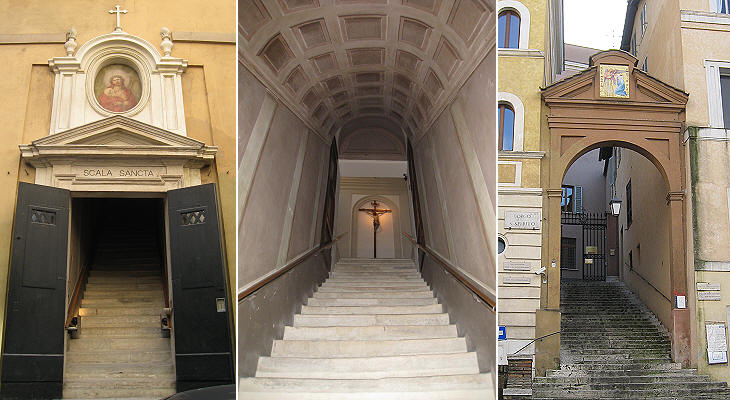
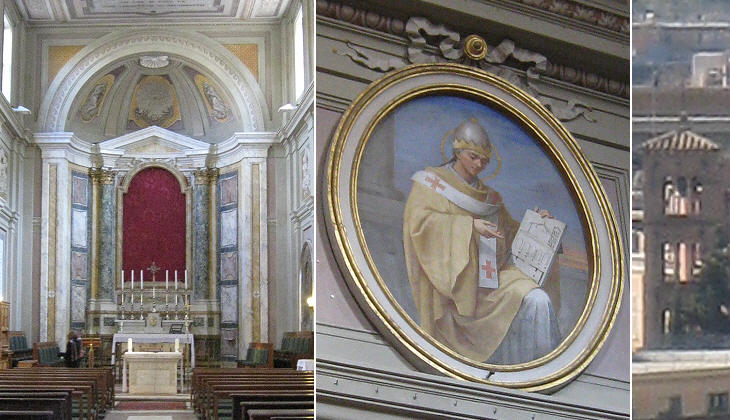
SS. Michele e Magno was stormed by the Normans in 1084 during the investiture controversy and it was rebuilt in the following century; its bell tower is not visible from the street nor from the small space in front of the church. The church eventually lost its connection with the Frisians and in 1508 it became a parish church. Its current aspect is due to an overall 1749 redesign by Carlo Murena during the pontificate of Pope Benedict XIV; the direct access to the church from the street is through a 33 steps staircase, which similar to Scala Santa, is ascended by worshippers on their knees.
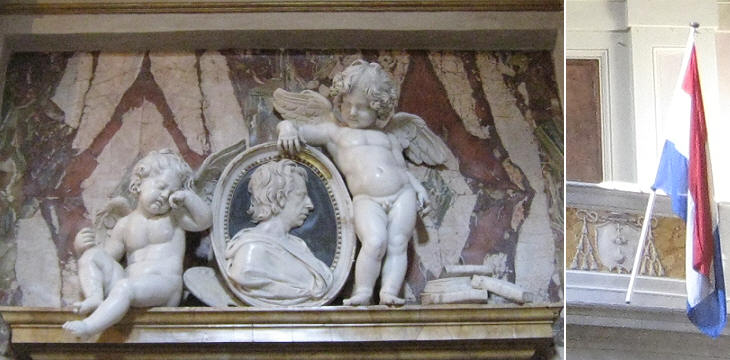
The German painter Anton Raphael Mengs (1728-79) is buried in the church. During his lifetime he was regarded as the heir to Raphael; along with the sculptor Antonio Canova and the art historian Johann Joachim Winckelmann he is considered the father of the Neoclassic style in Rome. Today the church is under the patronage of the Kingdom of the Netherlands, of which Frisia/Friesland is a province (click here for a list of national churches in Rome). The Walls between Porta Cavalleggeri and Porta Fabrica
The distance between Porta Cavalleggeri and Porta Fabrica is less than a hundred yards and the only thing worthwhile mentioning is an ancient sarcophagus placed by Pope Pius IV which was used as a trough for the horses of the nearby cavalry barracks.
Next plate in Book 1: Porta Fabrica Next step in Day 8 itinerary: Chiesa di S. Maria delle Fornaci |